 Tyson Heckert
Overview
From publisher Modiphius Entertainment:
The Reapers have invaded the Galaxy and the Citadel Races are on the verge of losing the war. In a race against time, Commander Shepard must lead their squad through a crashed Cerberus cruiser on the remote world Hagalaz to uncover its sinister secrets, but deep within the shattered cruiser stir dangers far worse than the Cerberus forces that guard them.
MASS EFFECT – Priority Hagalaz is a co-operative, story-driven game for 1-4 players designed by Eric W Lang and Calvin Wong Tze Loon 黃子倫. A branching, narrative campaign allows for multiple playthroughs with a different experience every time. The story changes in response to your actions – your early choices influence later missions. Gather Shepard’s squad from a selection of teammates from the Mass Effect trilogy: Liara, Tali, Wrex, and Garrus. Customise and upgrade your squad through experience and optional loyalty missions.
Published by Modiphius Entertainment, creator of many board games and RPGs such as: Mutant Chronicles, Fallout Wasteland Warfare, Skyrim, Dune: Adventures in the Imperium, and more, Mass Effect: The Board Game – Priority Hagalaz is described as a co-operative story-driven game. No crowdfunding effort for it was necessary, as Modiphius’ considerable size allowed them to create the game on their own. Readily available, it’s often cheaper on other platforms including Amazon. Modiphius regularly has sales that could bring their price in line with others, however.
Player count
For 1-4 players, three out of the four optional characters are picked for every mission. Commander Shepard must be in each. Characters are simply divided as evenly as possible when fewer than four players are present, including four-handing them when playing solo. Since the gameplay is quite light, there is no mental paralysis problem. I did find the character mats to be be a bit of a table hog, however.
Play time
Generally taking around an hour per mission, that can balloon a bit if players take their time talking strategy and moving carefully. Campaigns are three mission expeditions, though two optional side missions can be taken on to boost character loyalty to Shepard. This means a campaign will take anywhere from ~3-5 hours minimum. Pleasantly, there are more missions than the campaign requires, and players can take branching paths throughout. It’s a great way to add quite a bit of re-playability to the box. Additionally, each mission has multiple objectives to it, again adding more reasons to come back to it.
Gameplay
Light on gameplay but strong on tactics, Mass Effect relies heavily on its dice placement mechanic. Most choices then stem from the need to pay careful attention to turn order, available dice, and the evolving nature of the board.
Campaign Narrative
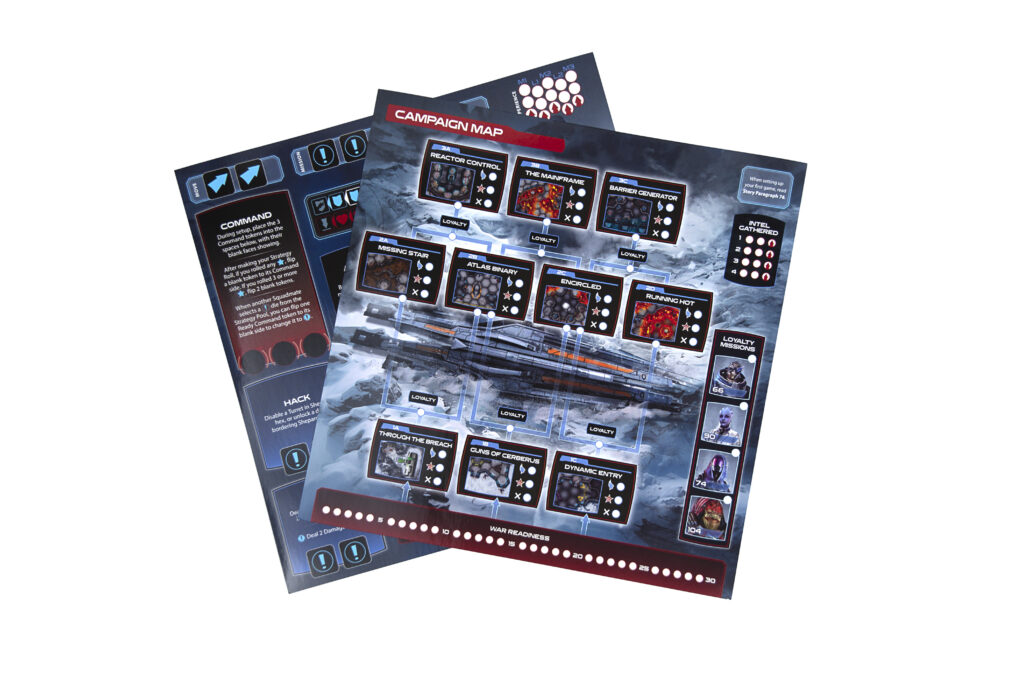
With 14 missions in total, players will play three of ten main missions, then two of four optional side mission in each campaign. Interestingly, missions branch such that choosing one of the three starting missions will lock one of the end ones and half of the middle ones. This is a really cool idea, as it gives the impression that players are carving their own path through the Cerberus cruiser while adding re-playability should they want to go back and choose a different route another time.
Setup
First, players will choose the mission, then pick which three characters will accompany Shepard on that mission, much like the video game. There’s a choice between Liara, Garrus, Wrex, and Tali, plus both male and female Shepard (love it!).
Mass Effect takes place on a gamebook full of maps—yay! While I actually don’t mind tiles, I recognize and appreciate the move to map books for some games. Especially those like this—smaller, faster playing, and without any exploration—it’s the perfect choice.
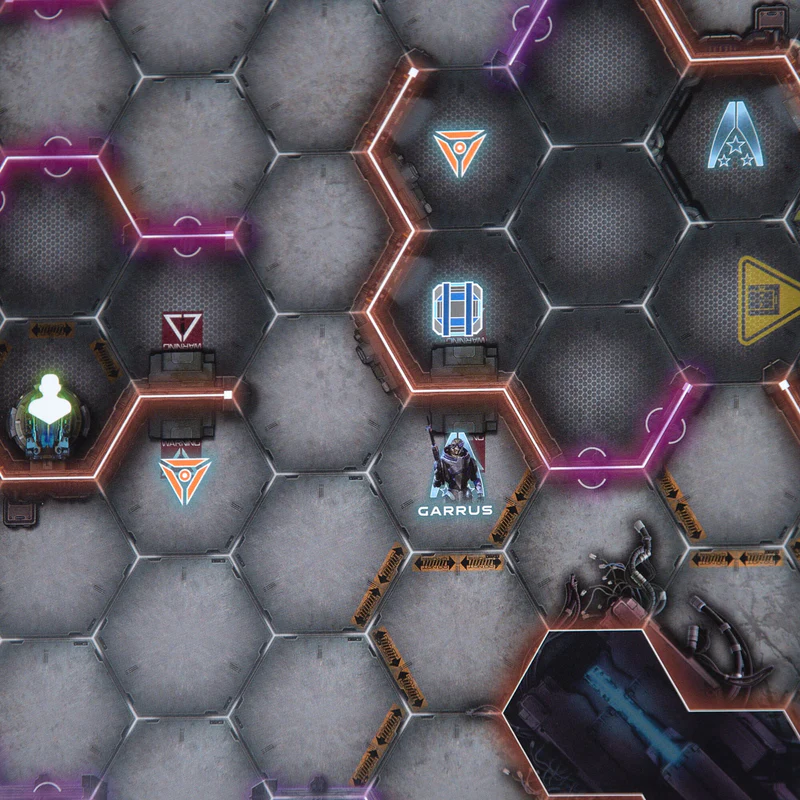
Players seed the map with a given set of enemies, items, automated turrets, doors etc. then place themselves on the spawn location before beginning play. It’s that simple to get going.
Dice Placement/Actions
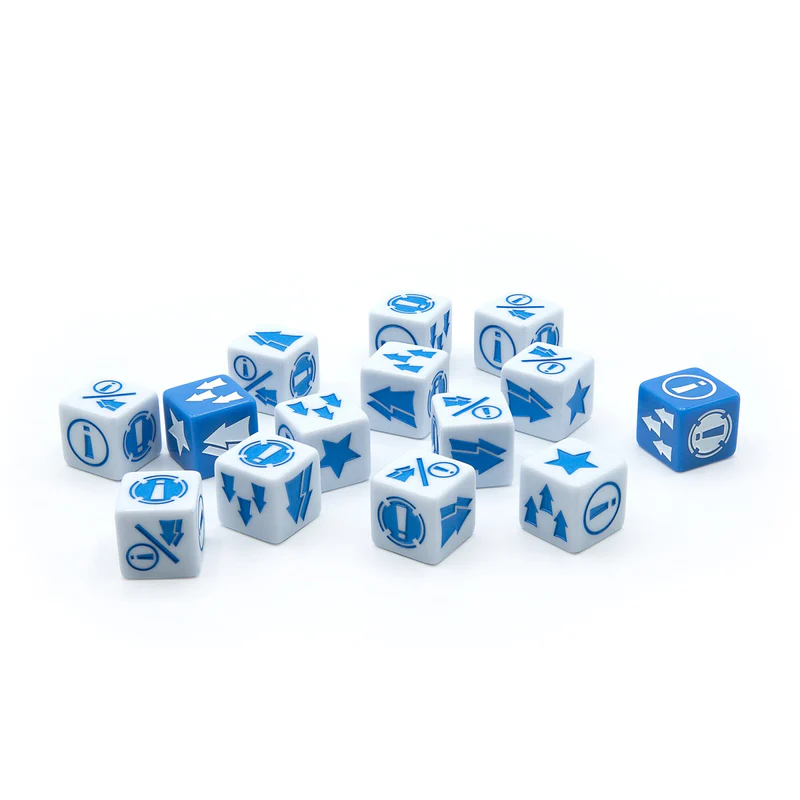
Key to Mass Effect’s gameplay is a simple dice placement system. Starting with twelve action die (plus Paragon die as the campaign progresses), the first player rolls all of them at once. This dictates what actions they can take by matching symbols to what’s necessary to complete an action. This is generally to move, attack, or interact with something. There are only so many places for die, and more importantly, used die stay on a characters sheet that round. When the next character goes, they only have nine action die to roll, and last to play only has three. The first character token is passed each round, so careful attention needs to be paid to the turn order to succeed.
Enemies act after each character’s turn. Technically, this is done by an event card. To start the round, characters are dealt one of these from the deck. At the end of each of their turns they reveal their card to see which enemies activate, spawn, or if any special events happen. This is a really neat and efficient way to represent enemy actions without adding complexity. Yet the unpredictability of the deck draws also adds tension and further need to utilize smart tactics.
Combat
The game is played on a hex-grid map, and enemies and characters both have firing lines for their ranged attacks. These branch out in all directions and follow very simple rules, but it’s an important consideration as other enemies and characters both don’t block lines of sight, and range is irrelevant. This means a miscalculation might mean a barrage of gunfire takes someone out before you’ve realized it.
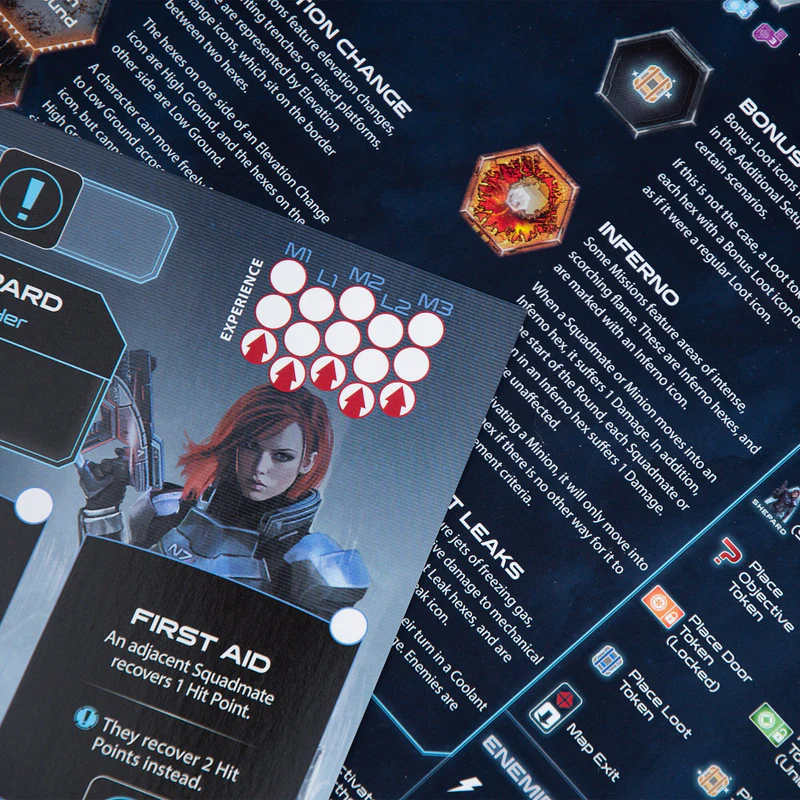
Defeating an enemy is as simple as reducing their shields to zero, sending them back into the draw bag. Elites are a little more difficult, requiring several layers of shields to be sloughed off before they’re defeated. This gives them presence and impact on the field.
Characters have shields as well, but also hit points. Thematically on point, and lots of fun, is the fact that all enemies and characters regenerate their shields at the end of every round. This means it’s alright to tank a little damage if it means completing an objective, or as I had to do many times, just shielding Shepard from oncoming fire. It’s another layer to the tactics and I found it a ton of fun
Multiple Objectives
While any other character can be downed and revived, one of the ways players lose is if Commander Shepard is knocked out. This further increases the need to be tactically aware of lines of sight to the commander, and the turn other they’ll be activating in. The other way to lose is if players run out of time. Although the timer is technically random (done by event cards), it’s fairly generous.
So how do players win? There’s actually two objectives for each mission, and sometimes multiple parts to them. For the most part these are Renegade and Paragon objectives, which are easy/hard to achieve, respectively. Each rewards a different narrative ending, but also a different campaign reward. Paragon objectives reward another action die to use, while Renegade objectives reward a token that can change the face of an action die. It’s awesome that the designer thought to include such a core feature of the franchise here, though I do with there was narrative impact to the decision.
Progression
On a characters sheet are a few core abilities they start with, then many more they unlock as they play. Some are upgrades of previous ones, and one is specially unlocked by completing their loyalty mission. As gameplay progresses, characters each XP for defeating enemies, which contribute to ability unlocks. Then they can come across valuable intel, loot drops spread among the mission maps, which also contribute to ability points. Finally, there’s the loyalty rewards that I mentioned. Those are specific to the loyalty missions which are breaks between the main missions.
It’s just enough progression to where the characters noticeably evolve over time, yet not more than it needs to be for the length of the campaign. Unlike the video games, there are no item drops, and there really doesn’t need to be since that would simply bloat the game systems unnecessarily.
What I Like
I’m pleasantly surprised by what Modiphius has come up with for the Mass Effect board game. After reading some unkind reviews, I was a little wary, but giving the game the benefit of the doubt and chance to stand on its own turned out to be right choice.
Combat & Tactics
First up is the dice placement system, which I like quite a bit. While some players can be turned off by this type of mechanic, and I can be too if it turns out to be annoyingly random or frustratingly arbitrary, Mass Effect doesn’t have these problems.
What I like most actually, is its simplicity. With a big, satisfying roll of twelve die, the first character is off to typically complete whatever action they like. It’s fun to need to watch carefully, however, as the first to go on one round will be the last in the next,. The plan you had with a character might not work if you’re not paying attention.
Defeating enemies is straightforward, and there isn’t an overabundance of rules to pay attention to while doing so. Focus stays on the objective, but ever spawning and shifting foes make it a dynamic battlefield. It’s a blast to have Wrex unleash his anger on a group, snipe foes from long range with Garrus, or disable them with Liara.
Small Campaign
With the perfect length for a small-mid size game, 3-5 missions is all you really need to get your fill. Yet there’s still re-playability as there will be missions you don’t see in a playthrough. Plus, only using three of four sidekicks means someone will be on the bench and can be used in a future campaign. Truly if the game were any longer I’d actually consider it a negative because without much enemy variety, and only light character progression, it would most certainly turn into a slog. There’s a sweet spot the game hits, and I really appreciate it.
What I Don’t Like
With plenty to like, my few quibbles with the game are mostly around the fact that I want more of it, and a little more from it. I was very pleasantly surprised to see a great rulebook, fabulous components, tightly contained gameplay, and good campaign structure for a change (there’s been some stinkers lately…).
Lack of Variety
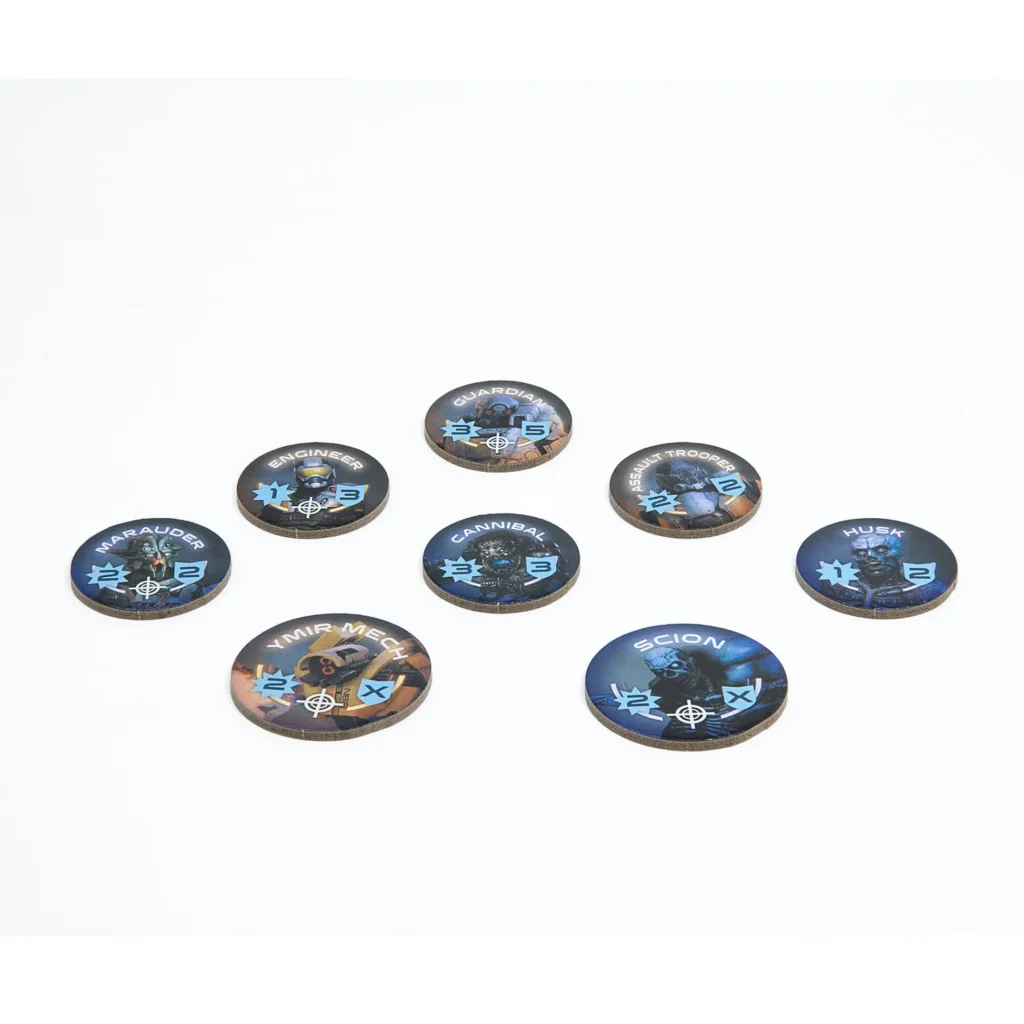
I’d like to see more from Mass Effect’s enemies and characters. There isn’t any difference in enemy AI, not really any status effects except simply ‘disabled’, and nothing else enemies or characters do except very minor things that revolve around opportunity attacks or movement manipulation. Then, characters have pretty basic abilities that often revolve around their core ability, or do simple damage or utility upgrades. That’s OK given the campaign length, but it would have been cool to see a lot more separation between enemies, more unique abilities, and especially some more unique map events or mechanics. Combat does get a little stale by the end.
Cheesy Writing
What can I say, the old Bioware is gone. The board game neither improves, nor messes with the video game lore. It simply sits side grade somewhere between the second and third games. The dialogue and introductions are standard affair, and while thematic, don’t really offer too much in the way of interest and certainly not any unique revelations. That’s not a dealbreaker, as focus stays on the better part of the game anyway, the combat, but it would have been nice to see a little stronger writing, or some special lore nugget that had Bioware’s blessing.
Components

Mass Effect’s components are fantastic. It actually goes the extra mile with a branded cloth bag and a branded dry-erase pen. In fact, every paper component is laminated and can be drawn on or marked as necessary. This is really cool and totally replaces any need for legacy components or paper pads. Why don’t more games do this?!
Just because they exist, I will throw out the fact that there are optional miniatures, but they are crazy expensive for what you get. The game’s cardboard tokens work just fine, and the character miniatures are plenty effective. Much like Gloomhaven, a mix of plastic and cardboard is a pretty good cost tradeoff to me.
Voice / Art / Music
Voice
There’s no voice over for Mass Effect’s fairly sparse narrative. Finding the voice actors and paying them for it would have been insane anyway. That said, they did get Mark Meer to voice Shepard for the trailer, and that’s super cool!
Art
This is a slam dunk. If not directly from the game’s art itself (which some is), any new art is perfectly incorporated. Wonderfully colorful and keeping the same style as fans are used to, this is how a themed board game should be. It’s absolutely insane that the same company created the Skyrim Board game, but so unequivocally fumbled the art direction of it. It’s great to see they’ve lifted themselves up and done a hell of a better job for Mass Effect.
Music
Come on, there doesn’t need to by anything other than the video game’s soundtrack on. Take your pick from the official OST, ambient mixes, covers, or anything in between:
The Tales Told
Unfortunately I don’t have a whole lot to say here. I wish there were more depth to the narrative, though I do appreciate that they didn’t try if they weren’t up to the task. Written by Calvin Wong Tze Loon, the story of Priority: Hagalaz takes place between Mass Effect 2 and 3.
Players are immediately thrust into a mission that feels like it would be a DLC from the game. Tasked with infiltrating a downed Cerberus cruiser before the arrival of a storm, they must choose between extracting vital data, or saving innocent people swept up in the plot.
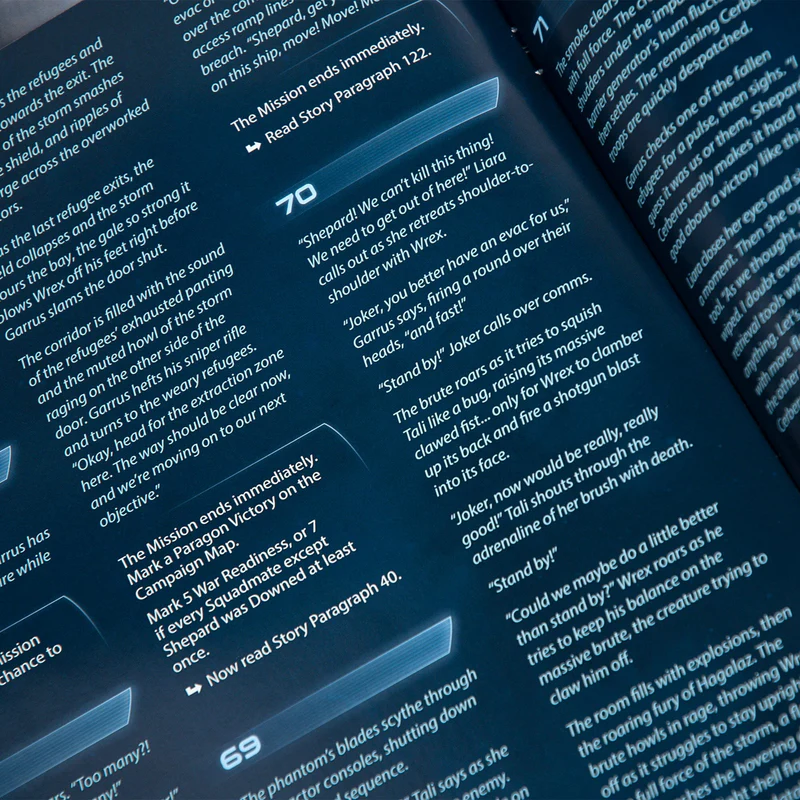
During missions, there is a choice of Paragon or Renegade objectives, mostly hard/easy, but there isn’t any narrative impact to these decisions, just the gameplay rewards they provide. Players are also often directed to a book of story entries, something to add flavor to what’s going on. Unfortunately these are all pretty much as expected and mostly just restate the obvious or put a bow on what you already know. There aren’t any twists or turns, and certainly nothing new added to the characters or their backstories, even in the loyalty missions.
As it is, don’t come to the board game expecting an expansion to the video game’s lore. There isn’t any actual tie in besides the theme, and while that’s a disappointing choice, I also understand that it’s a safe one.
You Might Like This Game If…
I’ve seen some genre veterans score the game pretty poorly already, and I can see why. Too light to stand up to bigger, heavier games, Mass Effect is going to be most loved by casual players. The upside to this is that kids, families, or inexperienced gaming groups should be able to jump into the game and have a great time.
Perfectly themed like the video games, the board game doesn’t have the same narrative punch that the video game does, and it’s not really trying to either. Don’t come to it looking for the type of story development that say… a novel might have.
That said, the game knows exactly what it does want to be, and it nails that. Expect a very reasonably priced, light but tight tactical campaign board game with a bit of narrative wrapper, a fun dice placement system, and a fair amount of re-playability.
Score


Capturing the spirit of Mass Effect, Modiphius has put together a game to rival some of the best in the small box, small campaign, tactical skirmish genre. Spectacularly themed and focused on a simple dice placement system for character abilities with light progression and a small campaign, it’s something that pleases without overstaying its welcome. We’re talking a scope even smaller than Jaws of the Lion, not Gloomhaven proper, as that’s the most apt comparison I can think of.
Although the game is probably too light for genre veterans, the writing cheesy and not reflective of old Bioware’s narratives, and the depth of content—enemy variety, mission variety, and character progression—doesn’t impress, the short, yet re-playable campaign saves it by ramping up the fun to end in a crescendo before ever falling off and dragging into a slog. For a much lower cost compared to other bloated games in the genre, Mass Effect delivers a strong experience in an often overlooked sweet spot.
Mass Effect The Board Game – Priority: Hagalaz gets 4/5 defeated reaper husks with a golden quill.
About the score
Review scores are out of five.
The Golden Quill award is for those games I keep in my collection, though it’s entirely possible for me to rate a game highly but not keep it or vice versa.
1/5: Would not recommend, would not play again
2/5: Some redeeming qualities, might recommend for the right person
3/5: Good game, would recommend
4/5: Great game, recommended that everyone give it a try
5/5: Perfectly achieves what it sets out to do, not to be missed