 Tyson Heckert
Overview
From publisher Lautapelit.fi:
Agemonia is a fully co-operative board game with challenging, moral choices, set in an expansive storyline for 1-4 players. Live your destiny, and become the mightiest of heroes — or the most despicable of villains — in this unforgettable adventure!
– The unique Stamina chip system combines your stamina and health together, and managing
these are key to success.
– Over 100 hours of gameplay per campaign.
– 38 scenarios with a blend of exploration, discovery, and fighting for your life!
– A Fail Forward system that keeps your campaign moving forwards.
Contents
Agemonia is a Kickstarter (crowdfunding) game that has had two print runs, one with an expansion. While the crowdfunding ended long ago, the game is also readily available on the publishers website.
In this review, I’ll only be looking at the base game. I did not pick up the expansion, but the reviews are generally quite positive!
Player count
While the game supports two to four players (or solo playing multiple characters), I think the ideal character count is four. This is because despite attempts to balance for lower character counts, there isn’t the action economy or combat utility to effectively play with only two characters, making most scenarios quite difficult.
Play time
Agemonia is an epic campaign. There are 38 scenarios, some replayable, each ranging from 1-2 hours. In addition, there’s a fairly robust town phase and travel events phase that happen between scenarios. Add this all up and the advertised 100+ hours per campaign is about spot on. I found the scenario’s rounds to be quite snappy and without a lot of player downtime. I do hope players enjoy reading or listening to exposition, however, since Agemonia has it in spades.
Origins
The crowdfunding campaign also boasted a completely optional Origins storybook, detailing the backgrounds of each of the playable characters, as well as the world itself with a mid size origin story. As a fan of storytelling, especially in games, I was excited to pick it up and see what the writers came up with for the advertised deep world building.
Gameplay
While a direct comparison to Gloomhaven would be easy, Agemonia does enough differently that I think it stands on its own.
Campaign
Evolving over several stages, the town of Runedale, your home base, unlocks new areas to explore, items to buy, and scenarios to discover all at once. This is also when your characters and their own personal stories advance, so the entire jumps in large chunks every few scenarios. It’s a straightforward way of presenting progress and I like that it removes the complexity of tracking XP while adding a layer of anticipatory excitement each time players know they’re about to advance to a new stage.
Setup
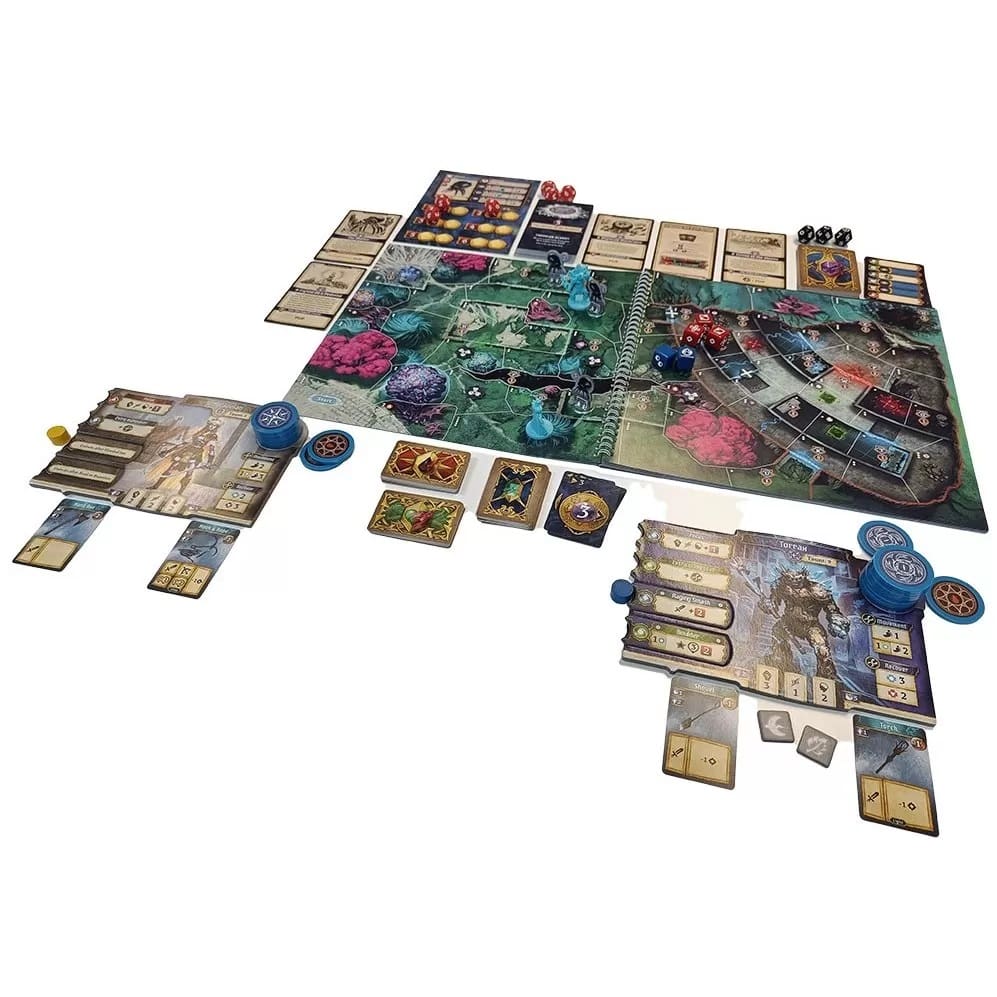
Instead of interlocking cardboard tiles, Agemonia plays on either large cardstock mats or directly on the scenario book. Setup is relatively simple with the introduction outlining what is needed, how to prepare the map, and a quick rundown of any new rules and win/loss conditions. Components for each scenario are usually a card deck and enemy standees or miniatures to fetch, so setup and teardown usually takes 10-15 minutes.
Round Structure
One key element in Agemonia is its initiative system. Like Gloomhaven, players choose an action before the round begins. From there, both side’s actual activation is determined by drawing a card. This goes a bit deeper because each players skills has a color associated with it, all colors activate at once, but players won’t know where that color sits in the activation. There’s a little bit of methodology to it, like red activations will more often happen before green, but players are always kept guessing a little.
Enemy AI is quite simple and follows a simple set of rules, advance to the player and attack, but some scenarios mix this up with special rules.
Exploration
Agemonia sets itself apart from other tactical skirmish and dungeon crawling games in its exploration system. Scattered around scenarios are interaction points, usually labeled with a letter. Approaching the visual range of a space and allows the player to read the front of the matching scenario card. That front side often offers clues about what it is and how to interact with it, mostly involving a skill test. These interaction points are important to a scenario, as some end up being puzzles or combat related to the objectives.
Stamina
The unique stamina system is a way to add a push-your-luck system and a cool way to streamline stamina and health together. Stamina is used in various ways throughout gameplay, but most often to boost actions like movement or attack damage. However, stamina and HP are linked in such a way that by taking damage you flip stamina tokens over so they’re unavailable for further use. This means it’s always at the top of mind, and keeping careful track can make or break a scenario.
Combat
Combat is simple, taking the dice from a skill an adding an equipped weapon’s bonus. Hit dice have several faces, but excitingly, one is an exploding dice side where a player can roll an additional die, and another side is a symbol that allows a player to spend stamina to add successes. I’d encountered many times where almost all the die require stamina, and it was a dire choice to exhaust myself to achieve my goal or waste the turn.
Some additional rules like armor, status effects, and ranged attacks add a bit of flair to the combat, but it’s nothing crazy for anyone who’s familiar with other games in the genre. I actually wish Agemonia’s mechanics pushed just a little further in unique ways, maybe something closer to Gloomhaven’s unique class abilities.
Achievement Gems
While a small addition, I also have to mention an interesting mechanic where players earn achievements for completing certain goals throughout a scenario, then spend the points later in the form of extra movement, damage, or skill test successes. While this can turn into a bit of a snowball effect, saved up and easily gamed to wipe out the tougher scenarios if desired, it is balanced by the fact that players generally don’t know how to earn an achievement at the start of the scenario. Later in the game there are other ways to earn these points, and harder scenarios practically demand their use.
What I Like
I do think there’s a lot to like in Agemonia. Shooting for easier play yet deeper exploration and much more narrative than it’s monolith cousin Gloomhaven, Agemonia aims high.
Replayability
I’m putting this in the positive category since I love a reason to return to a game, but the truth is it’s a mixed bag. Because so much of the scenario design revolves around hidden knowledge, it’s quite hard to know what’s needed and what to expect, so much so that it can result in a loss. However, during subsequent plays, anyone with a good memory could make informed decisions and the scenario would be almost too easy. It’s a shame that the first play has to be frustrating for the second to feel better.
Fail forward
This is more of a neutral item. Sometimes I like fail forward, but often when a game is being tricky or particularly brutal, progress feels like a participation trophy. In Agemonia there’s no punishment for losing. You could miss out on something, but this does not snowball into greater losses later. You can’t really go wrong with any story decision either, they just change the outcome.
Roleplaying
The rules suggest that players actually roleplay their decisions as much as play them out for rewards. There’s no wrong answer as far as which direction to go, so why not make the choice based on who you’re playing? I think that’s is a pretty underappreciated aspect of any game, and I’m glad the developers thought to add the suggestion here.
Narrative and world building
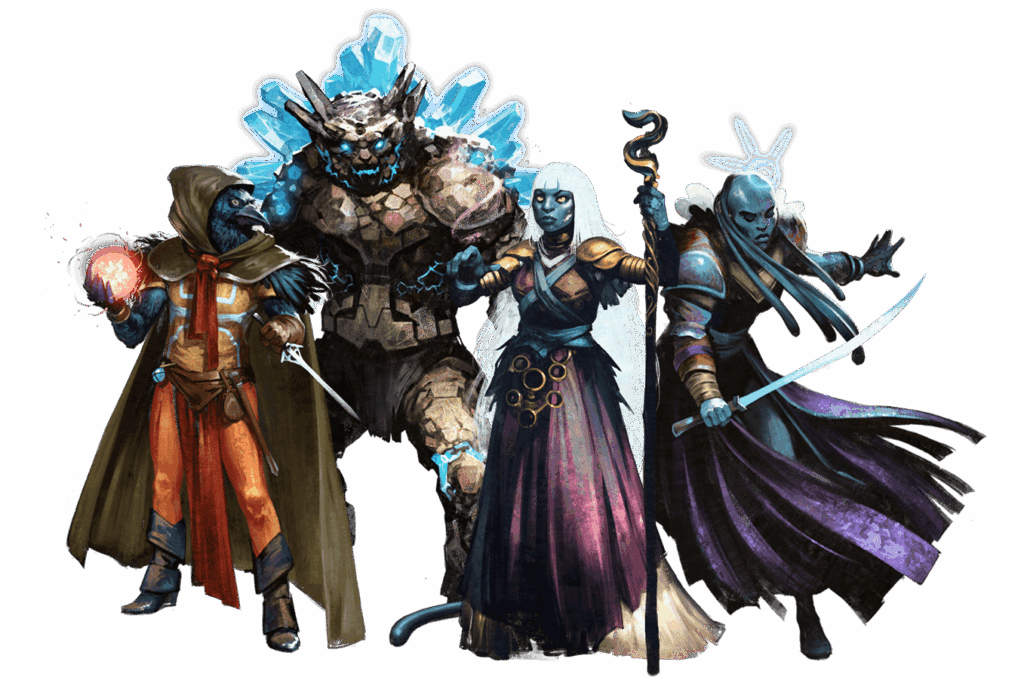
There’s a real strong attempt to build out Runedale. It’s clear that a ton of effort went into designing and digging deep into the world’s history, races, cultures and characters place within that.
Player / Ability synergy
Plenty of opportunity exists to use characters strengths and abilities to help each other. This can be a buff, or it can just the opportunity to specialize in a skill and take turns performing the right tests to complete a puzzle or scenario objective.
What I Don’t Like
Unfortunately I found more misses than hits in my time in Runedale. I do want to stress that these are issues for me, so I could absolutely see other players viewing them completely differently. The reception of the game seems extremely positive so far, actually better than most narrative campaign RPG’s, and that’s great.
Getting started
Greeted with a three scenario tutorial, players ease into the ruleset in chunks. Great! But after that, there is only the rules reference. While I appreciate a good tutorial, I found that I forgot specific rules pretty quickly, then had no idea where to find them in the reference because I didn’t start with it. The reference’s layout is poor, with some sections too short and some too long or even repetitive. It’s not a complex game, however, so while it all sinks in eventually, it can be a chore to learn.
Fiddly gameplay and bookkeeping
Every act throws new things at the player. From skills, to new items in the shop, new items to craft, the option to pick up one of many trades, and more. Most scenarios also have new rules or special events to pay attention to, often on scenario cards. It’s a ton of variety, but I found it becomes a lot to keep track of. Without an organizer or some better way to track everything, things were all over the table, and it was quite easy to forget what I could do or even was supposed to be doing. While I didn’t feel that it took away from the experience, I would say it drops the game into a the category of “fiddly”.
Hidden knowledge and gotchas
Probably my top issue. Scenarios in Agemonia are set up to be tactical, timed skirmishes, almost always with a unique way to progress and win. But here’s the catch: there is a ton of hidden knowledge. While the map and most of the interaction points are visible from the start, there’s no clue to what they are until they’re approached. Even then, they quite often result in a skill test the character might not be proficient in, require a specific item the player doesn’t have, or at worst, damage the player or cause enemies to spawn.
So this is a timed, tactical game, right? Right, so players have to rush to every point on the map, hoping and praying it’s the sacred relic they need and not a spider queen’s lair. The need for timed, strategic thinking clashes directly with the exploration and I found that I often had to run back and forth as much as fight, usually had time for neither, and simply lost the scenario. Of course if I played a second time I’d remember what to do and would have just enough the time to do it, but this design annoys me. Perhaps the game should not have a timer, or somehow cut it off when exploring.
Components
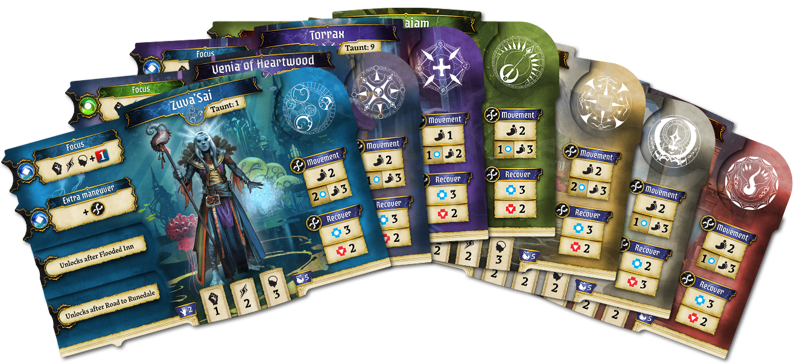
The components are all very good quality, I have no complaints. The website has a nice breakdown of the box contents as well as how the organizers fit back in the box (which looks easy, but is kind of a pain). Character boards are dual layered, the cards are thin but have a nice finish on them, and the tokens are thick and easily punch from the boards.
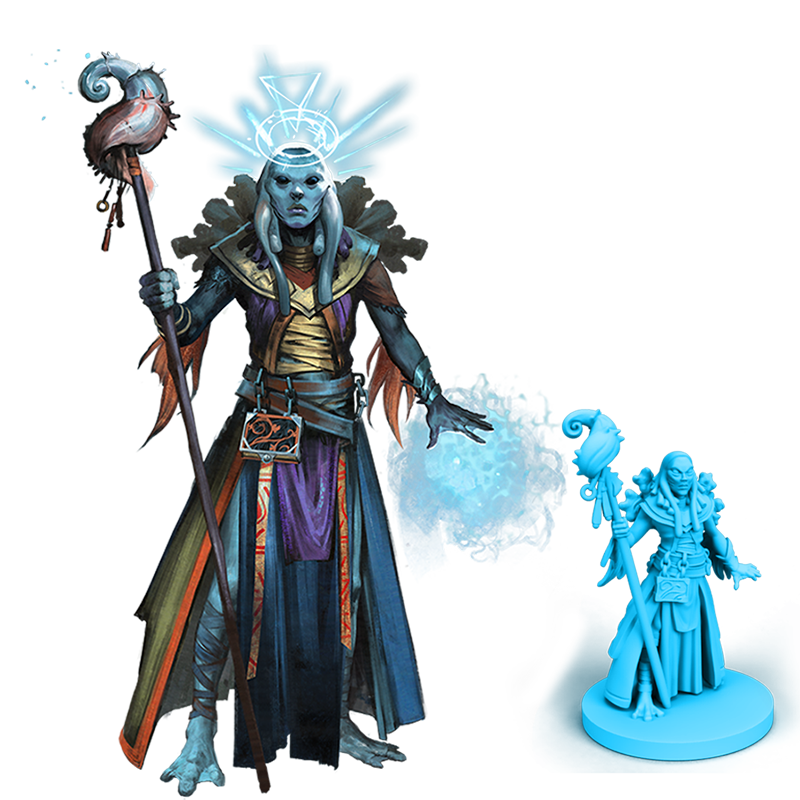
Since I did not get the miniatures expansion, I can only comment on the only minis core box, which are for the player characters. Enemies are standees of various sizes and I actually quite like them. The sizes are different, appropriately thematic, and there isn’t a overwhelming amount, so they’re not hard to organize and find when needed.
Companion App
Perfectly adding to the experience is the Agemonia companion app. Much like Gloomhaven’s campaign tracker, this app keeps everything from your party stats to the campaign state if you prefer a digital solution to the game’s analog game state components (there are stickers, so there’s a bit of a legacy component to the game unless you record digitally). I found the app easy enough to use but time consuming, there’s a lot of menus to click through if you have numerous updates to make.
Voice / Art / Music
Voice
The companion app includes very nice voiced narration for the scenarios, what a cool bonus! I found the voice work adequate, but nothing to write home about. It’s perfect for groups that don’t like to read to each other.
Art
Agemonia’s style is interesting. Relatively Gloomhaven’ish, it does stand on its own, and its colorful cartoony nature should be appealing for all ages. I’m not sure it particularly hits the spot for me, but I think it does a good job of portraying the world of Runedale.
Music
The companion app’s music is largely ambient noise and gentle melody more than real song. It works, but as always, I like to plug some options for enhanced immersion. Any favorite fantasy theme fits here, so maybe something from Jeremy Soule, or the wonderful OST’s of Endless Legend or Songs of Conquest.
The Tales Told
I’ll try to stay away from spoilers and stick to the overall quality of the writing, world building, and immersion. I’d say overall I do think Agemonia places a huge emphasis on characters, factions, reptuation, and all kinds of choices that impact them. I really like the depths the designer goes to to immerse the players, my only wish is that it was a little tighter, easier to understand, and a little more creative.
The world of Agemonia
Presenting itself as a unique fantasy world with unique races, factions, history, and intrigue, after a while it comes off as a bit of a standard affair. Runedale largely boils down to wizards and demons battling it out for control, with various ancient sites of power, prisons, and relic caches scattered about. The factions are generally political parties, wizard colleges, cultists and rogues. There is some good backstory to the races and player characters, but not a ton of progression or resolution unfolding through gameplay.
Character Stories
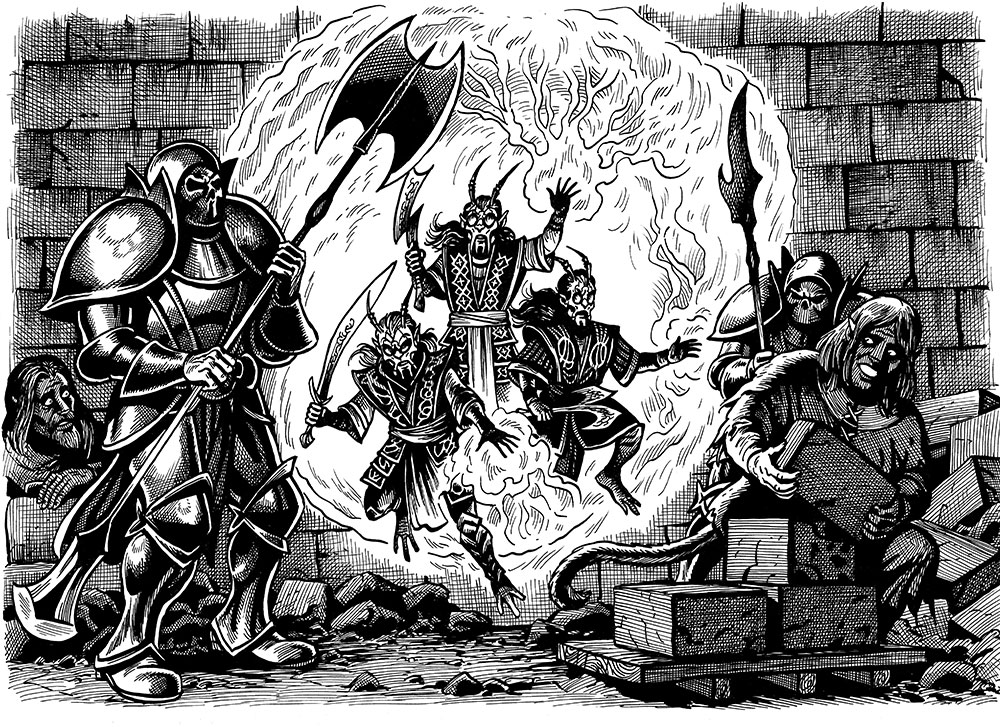
One important aspect of the game is character development. Each has they’re own booklet, with backstory, motivations and an introduction. Each act unlocks a little more of this book for the player to enjoy, ultimately ending in a conclusion of the story arc.
Unfortunately, I feel the characters fall flat with straightforward motivations, middling personalities, and conclusions inline with what one might expect. It’s all done well, just not very exciting.
Campaign Choices
In Agemonia you gain favor or ire with factions, and these usually act in tandem and in opposite directions. I was a little lost during some of these moments, as without memorizing which faction was trying to do what, I found story or randomly discovered plot points kind of obscure.
From a campaign perspective, there’s a couple major choices to make towards the middle and later parts of it. These are fairly epic and can change which scenarios you’ll ultimately end up playing, though sometimes they end up being the same scenario just played form the opposite side.
Immersion
I had a hard time getting immersed in Agemonia. I definitely appreciate the effort and I think tons of players love this aspect of the game, but I got bored with the standard fantasy tropes and soft characters and got lost in the confusing lore dumps. It took me out of the world quite a bit, but again, this is personal preference.
You Might Like This Game If…
I’ve taken a good look at various reviews of this game and one thing stands out – the comparison to Gloomhaven. Generally speaking, players like this game’s easier combat, better story, deeper writing, and especially exploration. I completely agree with this assessment, so if you found Gloomhaven’s puzzle-like combat exhausting, lack of things to do in a scenario boring, and narrative too light to remember or enjoy, then you might very well like Agemonia.
Score

On paper, Agemonia should be a near perfect game. Less tactically complex than Gloomhaven and with much more world building, narrative, unique exploration, lighter progression, and branching story decisions? Whoa. That said, while I can certainly appreciate the game, applaud the ambition, and think it will hit a bullseye for many people, it wasn’t for me.
I was taken out of the world when confused by which faction was representing what. Later I felt let down by shallow character stories that resolved too soon and too close to expectations, and I was disappointed to see the story follow a familiar pattern of good vs evil without much twist. Scenario design annoyed me, especially with how often I felt slapped on the hand for arbitrarily investigating the wrong point at the wrong time, and with the wrong character. And finally, I felt like there was more width but less depth on display when the game’s many progression systems unfolded like a wet tissue, revolving mainly around how many dice to chuck.
Agemnoia gets a 3/5 without a golden quill.
About the score
Review scores are out of five.
The Golden Quill award is for those games I keep in my collection, though it’s entirely possible for me to rate a game highly but not keep it or vice versa.
1/5: Would not recommend, would not play again
2/5: Some redeeming qualities, might recommend for the right person
3/5: Good game, would recommend
4/5: Great game, recommended that everyone give it a try
5/5: Perfectly achieves what it sets out to do, not to be missed