 Tyson Heckert
Overview
From developers Archon Studio:
Do you stand beside Queen Catherine Ironfist and vanquish the lurking chaos? Do you help the power-hungry Mutare fulfill her plans and turn her into a dragon? Or, maybe you despise all of this and want, together with Sandro, to cover the whole world with the shadow of death? Move through the beautiful land of Antagarich, plunge into adventures and strategic battles with endless possibilities.

Heroes of Might & Magic III: The Board Game is an adventure-driven strategy game for 1-3 players set in the cult fantasy universe. The game includes competitive, cooperative, and solo scenarios to battle and explore your way through. The adventure maps will be represented by tiles, with each tile divided into seven hexagonal fields.

Play different scenarios with different victory conditions, explore the adventure map to discover various locations, and play out epic battles using the unique miniature models that represent the iconic units from the original game. All battles will be performed with models on separate boards.
Contents
Heroes of Might and Magic III is a crowdfunded board game with its first print on Kickstarter and second on Gamefound. Not crowdfund exclusive, developer Archon Studio and other retailers should have stock for most of the content.
In this review, I’ll be taking a look at the core box and stretch goals (crowdfunding freebies) only. The core contains the Castle, Dungeon, and Necropolis factions, PvP and PvE scenarios, and the solo Castle campaign. The stretch goal box contains the Tower faction and campaigns for Tower, Dungeon, and Necropolis. Each add-on after these two boxes generally adds one faction, but there are cosmetic add-ons for neutral enemy miniatures, and 3D tokens also.
While I cannot comment on the recent crowdfunding expansions for the newest factions, I do have some of the factions from the first campaign, adding Fortress, Rampart, and Inferno. The only thing I’ll say about them is that the contents for each are the same, with the miniatures, cards, heroes, and tiles necessary to play. Fortress and Rampart have solo campaigns (Inferno does not!), and all three have new 2vs2 and PvP scenarios.
Finally, there is the Battlefield expansion. It adds a large board for bigger battles and a new way to play the game. I’ve not tried it, but have heard that while it looks cool, it has its fair share of issues.
History
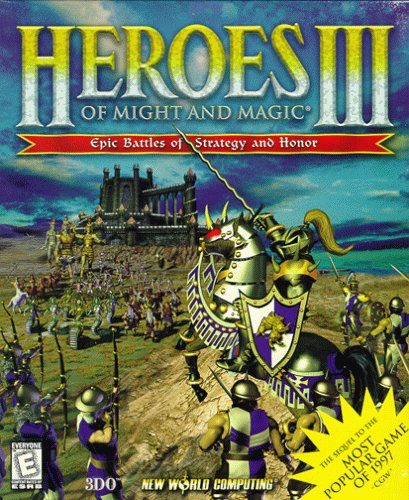
Some important context is that this board game is an adaptation of a video game from 1999, hence for those unfamiliar with the series, this explains the perhaps odd-looking name and jump right to game three. In the video game, players control one of many factions and use powerful heroes as avatars to roam the lands, raise armies and defeat other players (or AI computer opponents).
Key mechanics are gathering resources and equipment while exploring, casting spells both in and out of combat, conquering neutral races, and building a humble starting town into a formidable war fortress before ultimately raising an army strong enough to defeat rival opponents.
Another iconic feature is its unique combat system, where a “stack” represents groups of identical units. Instead of placing 10 units on the screen, the player can stack them into one representing all ten (or any combination of smaller stacks), with their combined attributes all mashed into one. In this way, a stack of 10 is twice as powerful as a stack of 5, and any damage the stack receives whittles at that number as the units within die off.
Gameplay
Heroes of Might and Magic III has a number of ways to play:
- Player vs. Player, with up to three factions in a free-for-all fight to the death
- 2vs2 (only with one of the added faction expansions)
- Co-op, where teams of two or three work together to complete an objective within a time limit (usually turning their armies on neutral units instead of each other)
- Solo story campaign mode, following a narrative through missions of increasing stakes and difficulty
Setup
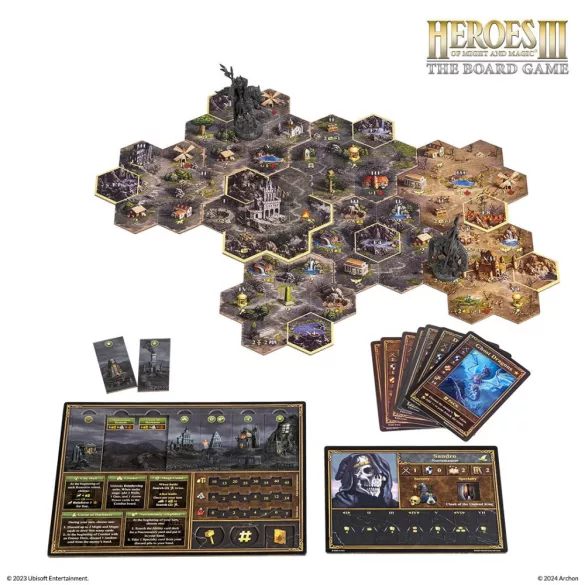
Setup begins by building the game world from hex-tiles, some random and some dictated by the scenario. Players will explore them and try to gain enough power to complete their objective (which could be to defeat other players) before time runs out.
Players choose their factions, then heroes of either type might or magic. As the name suggests, might heroes have abilities that benefit an army, while magic heroes start with an extra spell and abilities that benefit magic. Finally, some scenarios have special instructions, like enemy stacks, starting resources, or starting armies/town buildings.
While a second hero can be recruited during play, it does not have a board, cards or any special abilities. It fights with the main hero’s army (in a fairly non thematic teleport-like situation), but is mainly used for resource collection and support. They’re errand runners at worst, and extra layer of defense at best, but pretty critical outside of the campaigns.
Round Structure
Rounds alternate between resource collection, where captured generator buildings (like mines) produce for the kingdom, and Astrologers event rounds, where an effect takes place for all players.
Players will use their hero to move around the tiles, gather resources, capture buildings or interact with interesting and sometimes powerful sites. Neutral units guard some of these spaces, which have a difficulty level associated with them. This means that while the best tiles have the best rewards, they’re guarded by the strongest foes.
Players will first want to conquer the easiest neutral groups first, gaining experience, resources and powerful equipment. As they grow, players will add attribute cards, hero-specific ability cards, and equipment cards to their deck – yes there is a deck building aspect to this game! Higher hero levels will allow more cards in a player’s hand at once, and they can more often play a card’s stronger ability.
Once they have the required resources, players can expand their town, raise troops, or perform any of the available actions their current buildings allow, like buying spells or selling unwanted artifacts.
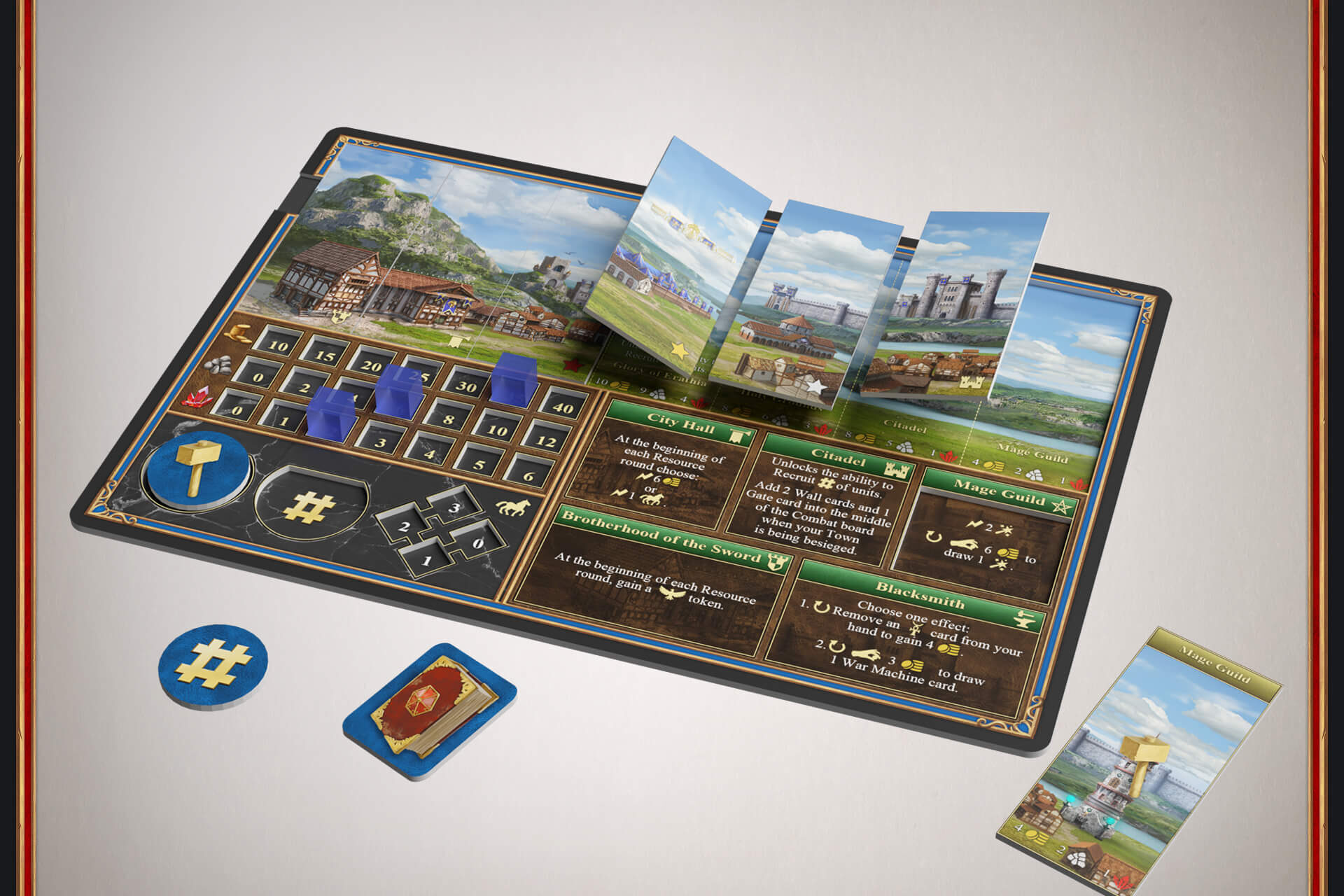
Deck building
Deck building is key to victory in Heroes of Might and Magic III. The general strength of units across factions is fairly static, so when two equally sized armies clash, victory will largely come down to how well players use their cards. Cycling through a deck for the best combination at the right time can have a significant impact, as spells, abilities, and gear have effects both in and out of combat.
Armies & Combat
Troops have a foil-coated #pack side. These represent “stacks” from the video game, but the board game keeps it simple so that there’s only one double-sided card for each available unit for a faction.
Once players have a sufficient army, they clash against the objective or each other to score victory. When in combat, attention shifts to the battle board. Each side spreads its units according to placement rules, though generally with melee in front and ranged behind. Then combat begins and units activate in order of initiative.
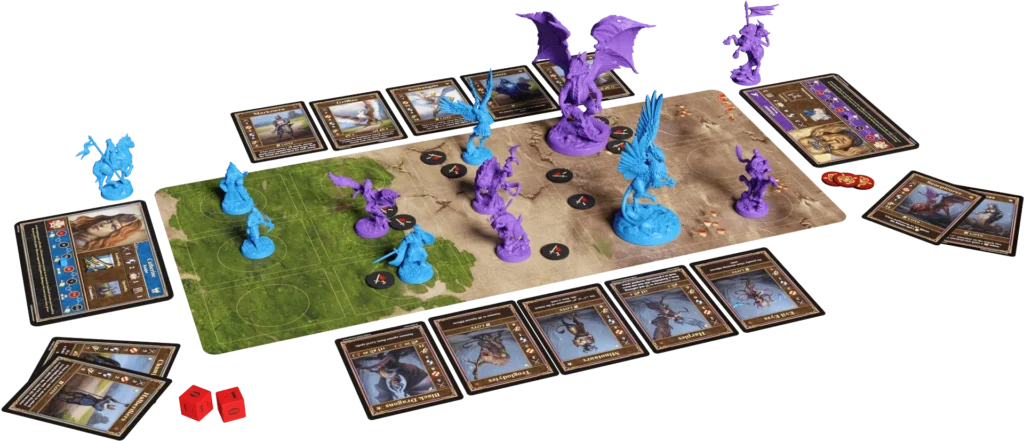
Units have damage, defense, and health stats and are either melee or ranged, walkers or flyers, and often have a special ability. With each attack, the red modifier dice is rolled. It can add, decrease, or have no effect on the attack’s damage. This is also when the two sides play cards from their hand, further modifying their units or inflicting direct effects, including damage, using spells.
Each unit can counterattack if they’re within range and not outright defeated after an attack. It’s an important consideration when deciding a target, as a retaliation attack can be devastating if it swings the defender’s way! When a unit takes enough damage, it’s flipped from #pack side to regular side, or removed from the board and put back in the recruitment pile if defeated. Players can retreat if the tides are turning against them or fight to the death until nothing remains.
Victory
If there’s a specific objective, like defeating neutral units, then players win when that goal is met. If players are fighting each other, they’ll want to capture each others castles and defeat each others armies until there’s no possible chance for a comeback.
There are some smaller, nuanced rules as well, like teleporting armies to support the secondary hero and a player’s castle, sieges if a player has built reinforced walls, morale that affects a player’s deck and some others, but they’re minor and don’t always come into play.
What I Like
There’s plenty to like in Heroes of Might and Magic III. Archon’s passion for the source material is pretty clear, and despite a few blemishes, I think the board game works. It’s a fun game to play, and that’s what counts.
Art
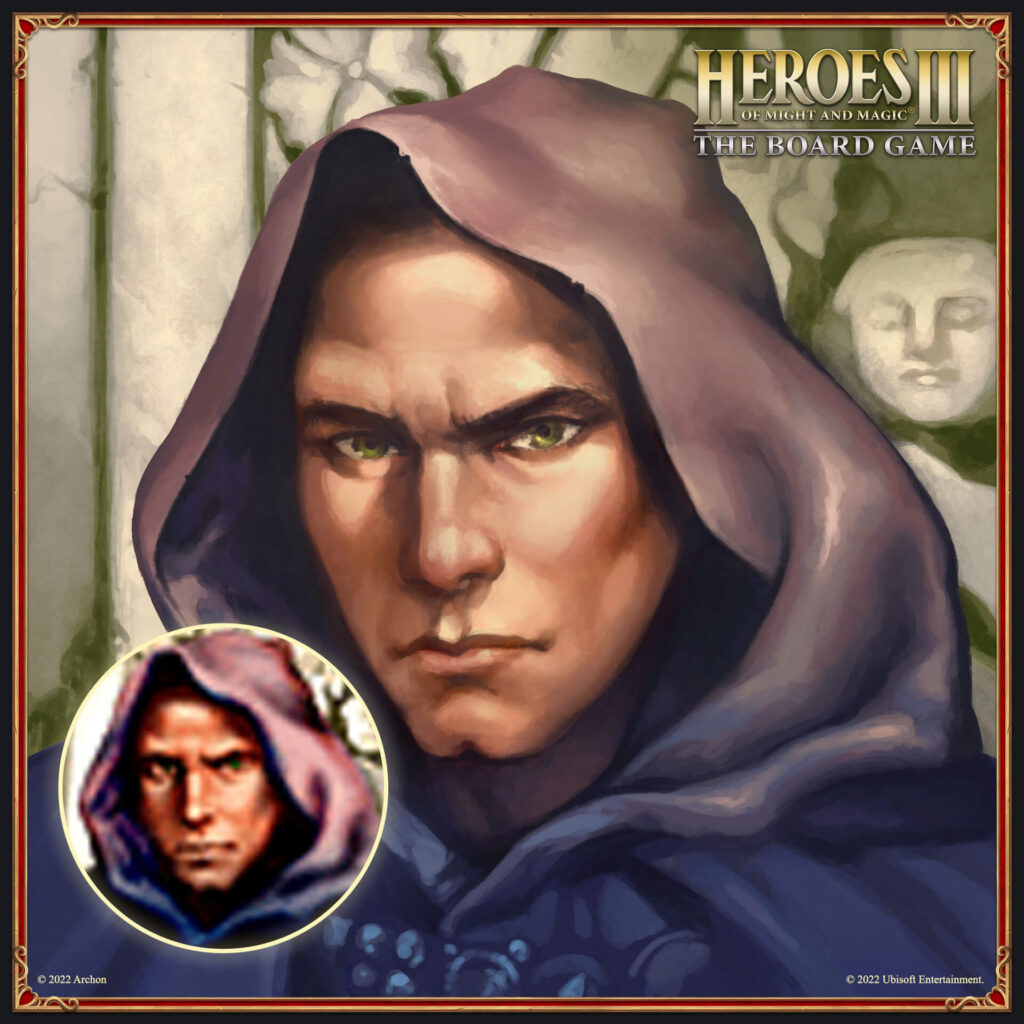
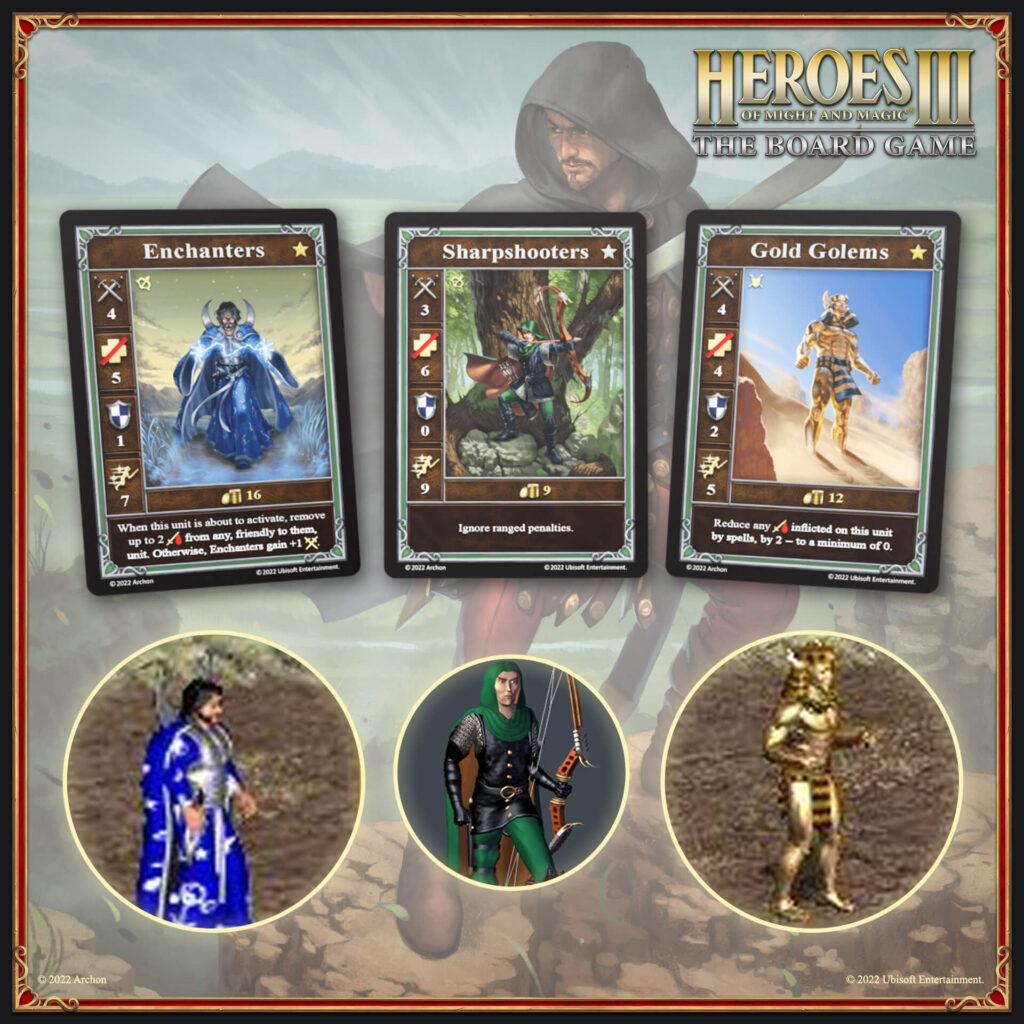
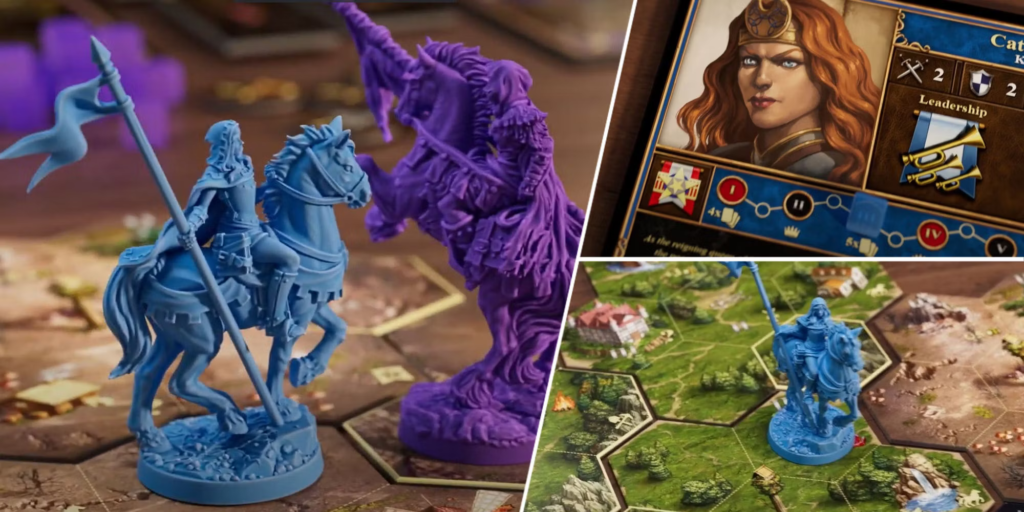
I’ll start by gushing over how gorgeous the art is. It consistently fits the world of Erathia and the amazingly colorful, high contrast, cartoonish beautiful art is at the forefront. It should pleasantly surprise those looking to enjoy a nostalgic experience. To borrow a saying from video game remasters – often a remake is better than a straight remaster because developers can reimagine visuals closer to what people have in their mind’s eye, not necessarily how it was. I think Archon did exactly that with this game, creating new art that perfectly replicates what our young minds imagined.
Below are just two of the comparisons Archon has showed to demonstrate how their artists converted the video game graphics to board game art.
Spirit
Adapting a video game to a board game is a tall order, but especially one like this. Archon nailed the feel of the video game. They delivered an experience true to the source that fits in a single session, about 1-2 hours per player. Exploration, resource gathering, growing your hero, army, and castle, then clashing in epic battles — it’s all here.
That soul is important because it goes a long way toward making the game fun. Some games have a cool factor to them, and I’d say this is one. Erathia is a big, magical world and subtle variety in how everything from heroes, to factions, to spells, abilities and items work creates a fun gameplay loop. Despite the fact I think some of the design could have been tightened up, Heroes of Might and Magic III is enjoyable.
Deck building
I’m pleasantly surprised by the deck building in Heroes of Might and Magic III. It’s good to see how well the mechanic works in a game like this to represent the balance between item and spell use from the video game without allowing one player to outright overwhelm another. I was hesitant at first, thinking it would be too simple, or with too few options or impactful abilities, but in the end, it just works.

There’s some deep tactical nuance to the deck, and players have the agency to build their hero how they like. Gaining a card as a reward always allows a choice between one of three, two drawn from the respective deck or the top of its respective discard pile.
Cycling through their deck, learning to manage it, and going on the attack at just the right time is often key to victory. It’s a cool addition and a great way to represent individual heroes and play styles since most of the faction units end up a little bland and similar to each other.
The only downside, then, is the unfortunate, swingy nature of randomness. Some items, spells, and abilities are clearly better than others, or very necessary for a specific build, so even with attempts to mitigate that luck, a player who gets everything they want out of the draw deck will have a pretty big advantage over one that doesn’t.
Scenarios
The few included scenarios are pretty fun to play, and while I was initially on the fence about the solo campaigns, after playing some of them a second time, they’ve grown on me. The Castle scenarios serve as both a quick introduction to the mechanics and a fun way to play the game differently than you normally would. The rest of the campaigns follow a similar pattern but are much more difficult, often taking advantage of faction strengths.
I also took some time to play the game solo two-handed, that is, playing both sides of a PvP or co-op session myself. Some people shy away from this, but I think it can be a lot of fun, provided there isn’t much hidden information in the game. I’m pleased to say Heroes of Might and Magic III continues to deliver across its game modes.
Since there isn’t a ton of scenarios in the box, I’m also happy to mention that the passionate community of players have come together to create quite a few of their own scenarios. Some fabulous people have taken it upon themselves to collect the best in this excellent fan made book.
I’ve actually gone and written my own campaign for Castle. Recently getting into game design and especially writing, I thought it would be a fun project, and I wanted to show what was possible with the combination gameplay/story format the game provides. You can check it out here: The Queen’s Gambit
What I Don’t Like
Let’s take a look at some of the sticking points that I think hold Heroes of Might and Magic III back. For some people, they might even be enough to swear the game off completely.
Balance & Randomness
I touched on it a bit already, but the game could have used a little more balance and randomness mitigation. There’s a significant difference in power between some of the spells, gear, attributes, and even the heroes. Some are quite niche and barely used, while others offer a clear advantage in combat. It’s possible to utilize some different builds for different play styles, but they’re hard to pull off. Combat strength is still going to be the easiest path to victory. It can feel bad to struggle with cards you don’t really need for your play style while watching another player power up and then gobble the board.
I think something to help might have been a rule like: “pay five gold to redraw your advancement cards”. This is just one example, but the whole game could have used a little tightening up, with more play testing and tweaks for many of the stats and spells.
The Death Spiral
Related to the first point, the game is structured so that players are heavily punished whenever they lose a part of their army, either from bad luck, or sub-optimal play.
Losing units means a hero can’t take on harder neutrals or enemy armies; they have to wait to reinforce. That can be a long wait, as it can take an entire game to build up an army and many turns to replace parts of it that are lost.
While players can always back out of combat, that costs resources too, further holding back a player who wasn’t doing well in the first place. This can lead to a situation where one player who plays perfectly can race toward the best rewards on the board and so quickly outclass everything that there’s no chance to catch up. While bad luck may strike them sometime, it’s equally possible that it won’t.
Because of this, players are tempted to be extra cautious, dancing around each other and ducking away at the first sign of trouble. I wish there were a few more rules such that losing troops wasn’t as much of a blow. Maybe allow more recruiting or have cheaper units be available, or perhaps a system where a player falling behind can catch up somehow.
Of course, none of that is a problem with the solo campaigns. In fact, most solo scenarios state that you lose the scenario if any combat is lost. Solo players might be just fine with that. Indeed, I didn’t find it problematic because the campaigns have a bit better balance and no other players to worry about.
Rulebook
I’ll mention the rulebook next. While I didn’t find it atrocious, it’s also not great. One infuriating thing it does is cram information into too small of a space without a marked way to reference it later. While technically the most important rules are there, they’re hidden in places you won’t remember when you need them later. Unfortunately, there are also some grey areas the rules don’t cover, and the community is full of questions about details and interactions.
I again have to shout out the excellent fan made rulebook rewrite to help mitigate this problem. It’s still not what I could consider perfect, but its much better than what came in the box.
Scenarios
While I might like what’s there, I don’t think Heroes of Might and Magic III has enough scenarios. The few offered for both PvP and co-op are embarrassingly low, and players can blast through them in a couple of plays, possibly over a weekend. The campaign in the core box is alright, but only when combined with the three more campaigns in the stretch goal box does it fell like there’s enough to be satisfied. It is fun to play the thirteen solo scenarios when they’re all there, and it’s good to see Archon deliver on that front.
I’ll mention it again: thankfully, the community has come to rescue. Between the passionate work of several people, there’s a great number of scenarios spread around the web, but some are collected in this excellent fan made book.
In addition, I’ve gone and written my own campaign for Castle. Check it out here: The Queen’s Gambit
Lack Of Variety
While the visual variety is strong among the factions, the mechanical could be better. There are some differences between them, but they all have the same number of units, pretty much the same hero stats, and really just one unique building each, following roughly the same progression curve.
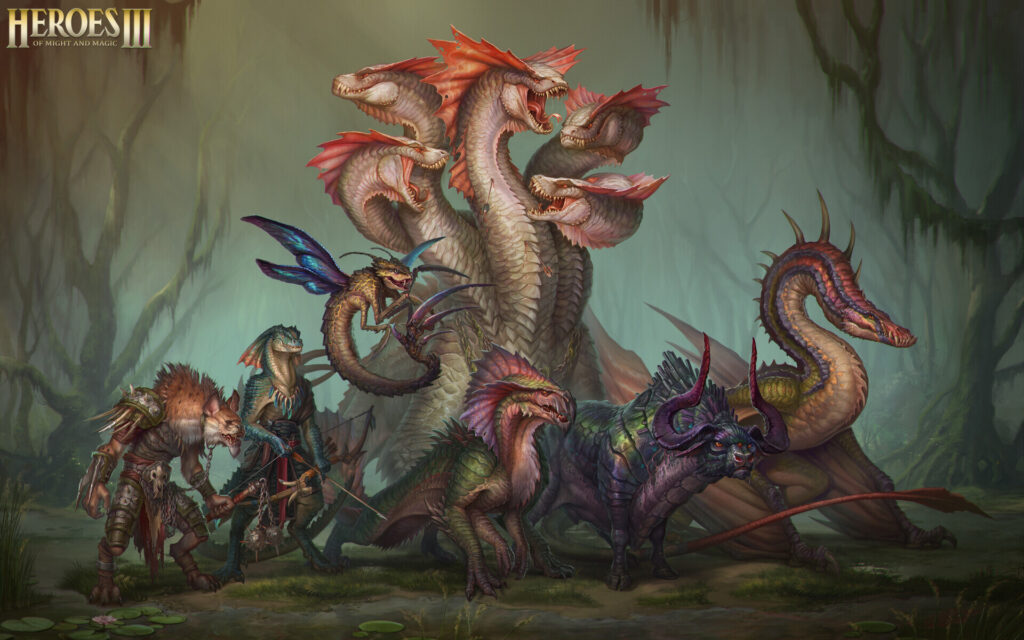
Generally, Castle is well-rounded and easy to play, relying on stronger troops. Dungeon has weaker troops, but one very important building, the summoning pit, allowing constant recruitment of neutral units. Necropolis has mid-strength units but abilities that allow them to buff, heal and replenish their ranks rapidly. I’d say Necropolis is the hardest to play, but they’re all plenty powerful when used to full effect.
That said, I would have liked to have seen the variety pushed much farther. You won’t see really unique abilities like market manipulation, swarming weaker troops, or a faction that favors a hero and their deck over straight combat units, anything like that. Heroes progress about the same, pull from the same decks and have armies that fight pretty similarly.
Lack Of Depth
Lastly, I wanted Heroes of Might and Magic III push into a heavier weight category. I mentioned the difficulty adapting and balancing the lengthier video game experience to a board game already. While I understand the thought behind going a simpler, tighter route, especially when balancing play time, I actually would have preferred the game lean into the idea of a longer and deeper experience. I envision something twice as big, doubling the round numbers, world size, hero levels, and troop numbers.
Some of the satisfaction of exploration and empire building that the video game has is lost in translation, and having a lengthier experience with deeper deck building and progression might have helped mitigate some of that. I think it would have left some breathing room for more variety, if nothing else.
I’m thinking Twilight Imperium when I say big, where start to finish might take a whole day, or even a weekend, maybe 10+ hours. That’s long, but it makes you appreciate the growth of your empire and allows for a whole lot of breathing room when making choices backfire.
Components
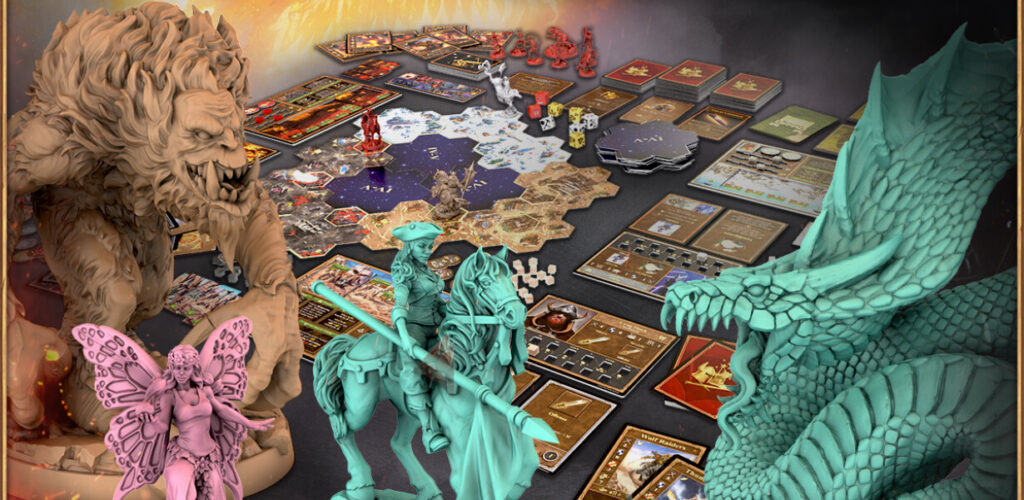
While the components in Heroes of Might and Magic III are great, there’s a caveat with that. The core box has everything players need, making the stretch goal miniatures simply glorified playing pieces.
Paper
First, I’ll talk a little about the paper material. It’s all of standard quality. The cards and cardboard are perhaps a little thin, leading to slight warping in some cases, but it’s nothing to complain about. The dual-layer boards hold up very well, and the gameplay components are sturdy such that after a whole bunch of plays, there’s not a scratch on them. I will only mention caution when adding or removing buildings to the town boards. They fit so snugly that it’s easy to pull too hard and rip the finish off them. I haven’t done it yet, but felt it was close.
Plastic
So how about the miniatures, the crown jewel? Archon knows how to make miniatures, period. In fact, if they had only wanted to make miniatures and left the game design to someone else, they probably could have been successful.
I wouldn’t say they are the absolute top-of-the-line, but the sculpts are great, the detail is good, and the plastic is a hard material so it doesn’t bend easily. It would snap if pressure were applied, but the miniatures could fall on the floor and easily survive. There are barely any mold lines or gaps, and I have not seen any miscasts, broken, or missing pieces, so production was done very well. As a bonus, the bases are also sculpted.
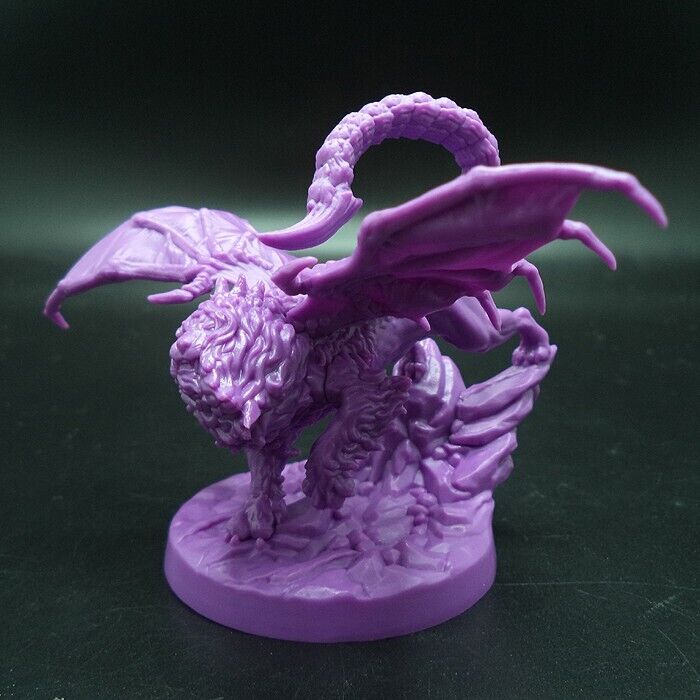
There’s only one miniature that I would say falls on its face, that is, if it had a face! The manticore from the Dungeon faction is sculpted so that its flowing mane covers most of its head. At a glance, it doesn’t look like it has a face, and the complaint is so common that it’s a bit of a joke in the community now.
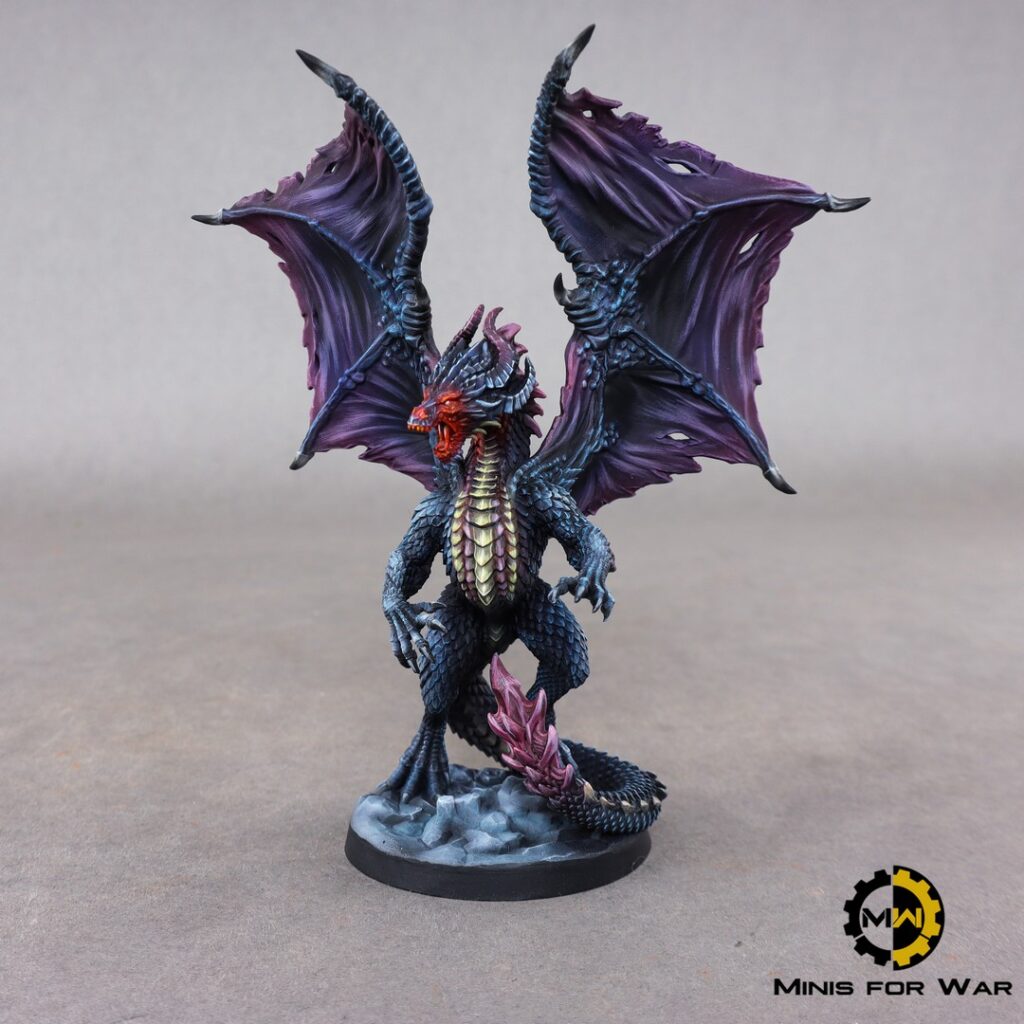
I have not had time to paint any of my miniatures yet, but there are plenty of examples of painted and unpainted copies. Just look at the amazing Black Dragon done by Minis for War!
3D Tokens / Faction & Neutral Miniatures
I’d considered putting this into the previous category of things I didn’t like, but I’ll leave it here.
While I would consider the faction miniatures and plastic tokens generally of good quality, I didn’t find them particularly useful, or even practical.
First, many of the resource tokens are flimsy, tidily-wink-like plastic with a basic embossing on them. The problem is that the plastic is either bright yellow or dark black, but either way ugly and much more challenging to read than the cardboard tokens in the core box. I suppose if you painted them it might be pretty cool, but that’s a ton of work to use them properly.
And for the miniatures: I already stated how great they are, the problem is there’s just no need to use them. You can put them on the battle board during combat, but the board is spaced so that the unit cards fit on them instead. Combat can be quite fast in some cases, and the cards have all the necessary information on them anyway, so it often isn’t worth digging minis out of the box.
Those who want the toy factor will probably enjoy painting and taking the time to properly use all the plastic the game provides, however. Don’t get me wrong, it all looks awesome; it’s just not something I’d regularly use unless I was trying to show the game off to someone.
Stretch Goals
Saving the best for last, the stretch goals that add the Tower faction is a triumph compared to the other boxes. It includes the faction itself, campaigns for three factions, new tiles, new heroes for all factions (even the extra faction expansions, except Inferno), and new cards, including Astrologer events, abilities, spells, items, and neutral enemies. That’s a lot of content added to the game; it’s just a shame it didn’t add more non-campaign scenarios!
Voice / Art / Music
There’s no voice over for the campaign scenarios, though it might have been interesting if Archon partnered with Foreteller to hear what they could do with it.
Musically, Archon didn’t need to bother coming up with a soundtrack either, players will probably be blasting the Heroes of Might and Magic 3 video game soundtrack the whole time, adding to the nostalgia of witnessing one of their fondest games on the table.
Some other musical suggestions might be recent video game successor to HoMM, Songs of Conquest. I also think the 4x game Endless Legend is quite a good fit, with enough mysticism and heavy drum lines that to match the theme. I even like the Elder Scrolls Online’s soft violins and bombastic drums for this game.
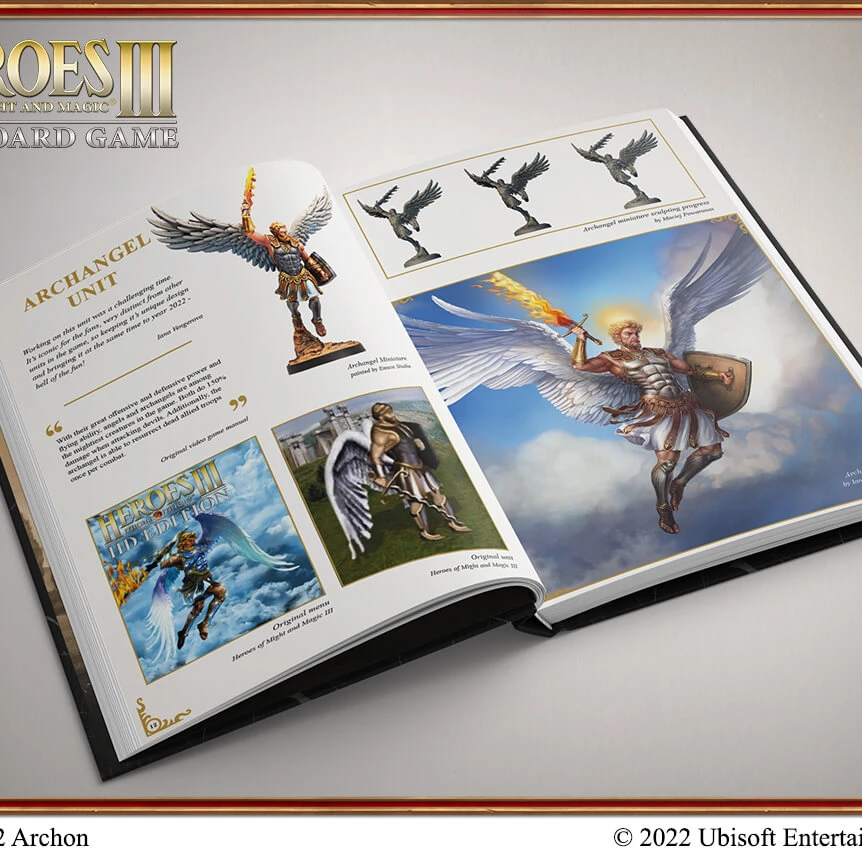
Finally, the art. I already mentioned how fantastic it is, but without seeing it up close, it’s hard to put into words. Archon is offering an art book with their crowdfunding campaign, and it’s one of the rare times I’d actually recommend it. It’s that good.
The Tales Told
Let’s talk narrative. Archon Studio is Polish, so while I think a little leeway is allowed, there are some rough edges in the grammar that even a simple run through checking software would have caught. It’s funny because if you read some of the narrative in your head with a polish accent it suddenly starts to make more sense. This is minor quibbling, but I thought it was important to point out.
Overall, while there are attempts at being descriptive and evocative throughout the narrative, I do think much of it falls flat. You can tell someone was on the right track, there just needed to be a little more strength to the backstory and a little more tension to the plot. I didn’t really feel a connection to who I was playing or their struggle, and I wasn’t emotionally invested in the moment as I raced my army across the board. Still, the stories are serviceable, fun, and I’m glad for their addition since Erathia is a game world that is begging for narrative depth.
**Warning: Spoilers for the campaign missions ahead**
Castle
Following the story of Catherine, she arrives at her native homeland to find it overrun with denizens of the rival Dungeon faction. The introduction tries to be edgy, with an angry sea filled with the bodies of lost souls, but I have no idea who the people are.
1. Homecoming
The first mission is truly a tutorial, holding the player back in every respect and rushing them to defeat an enemy in only a handful of turns. There’s some mysticism when Catherine travels through a hidden doorway to a literal dungeon of enemy denizens, then out the other side to defeat hordes of them, but that’s about it. Catherine rescues Rion, a legendary healer, though the flimsy description of him didn’t sell me on his abilities.
2. Guardian Angels
Mission two opens up a little, then adds flavor when enemies roam the land, and Catherine or Rion (whichever you chose to play) encounters Archangels defending one of the settlements. Again, the mission is a race against the clock, as there’s just barely enough time to travel the map and defeat both armies of foes. Gold units and hero level 5 are unlocked here.
3. Steadwick’s Liberation
Mission three is the climax, where enemies are everywhere. Catherine or Rion need to beat them back to where they came from. Mechanically, this scenario is the strongest as a rival roaming army will try to capture your castle, and you’ll need to balance exploring, defending, and attacking. It’s the longest scenario, with all options open to build and expand, so it’s the best of the three. It’s not difficult because Castle units are quite strong, and narratively it wraps everything up nicely but doesn’t add anything new or particularly interesting.
Dungeon
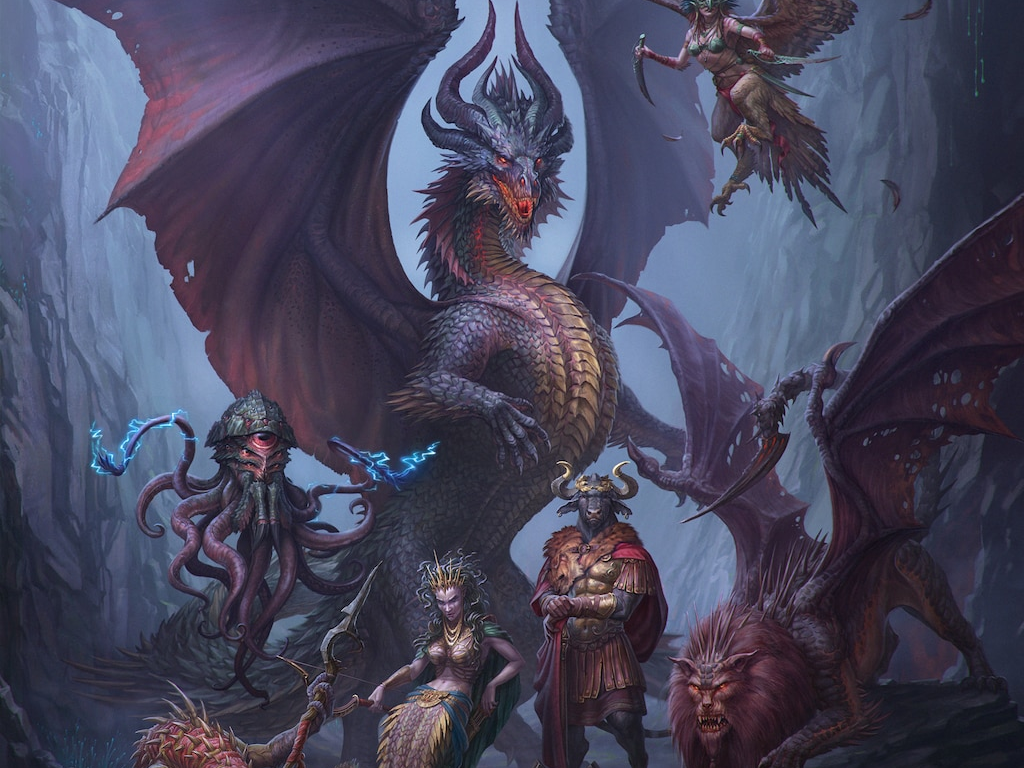
The Dungeon campaign opens with the same attempt at being edgy and is slightly more successful. The faction is full of simple-minded, brutish creatures, with cartoonishly evil villains that lend to an easier time immersing in the premise. The story follows Mutare, who is on a mission to conquer rivals, take land, and drink the blood of a dragon to transform into a dragon.
1. Savaging The Scavengers
The first mission is a straightforward beat ’em up, where Mutare is conquering land. It’s a difficult mission because of the number and strength of enemies thrown at you, and if you play it like a Castle mission, you’ll lose. Dungeon doesn’t have strong enough troops, and losing any of them won’t leave enough time to replenish and defeat the rest of the enemies. The key is in the Dungeon specific faction building, summoning portal. It allows the recruitment of neutral units each turn, which are always a little more powerful than the #Few side of faction units. With an entire army of neutral units, you’re just strong enough to beat both enemy armies.
2. Blood Of The Dragon Father
The second mission is even harder, requiring some strategic play and a little luck. The objective is to race against an enemy army to reach the Dragon Utopia and defeat the actual dragons within, taking their blood for the famed dragon transformation. In the scenario, neutral units power up after a time, so while the consistently tough fights super powers the player’s hero, defeating so many strong armies without taking precious time to replenish troops is difficult.
3. Blood Thirsty
The third mission is the big showdown. Mutare begins her transformation into a dragon while enemy armies throw themselves at her, and simply surviving is enough to win. Oddly enough, this scenario is significantly easier. It similarly powers up the neutrals, and the enemy armies are powerful, but there’s one major difference: you can start with a dragon. Not only is this single unit enough to defeat most of the enemies and neutrals, but if it’s a crystal dragon, it also showers you with crystals, and this gives you the time and resources you need to win. The campaign ends with Mutare losing herself to an unquenchable desire to sit on a pile of treasure, ha ha… It’s a straightforward narrative for the short campaign and I think it’s OK.
Necropolis
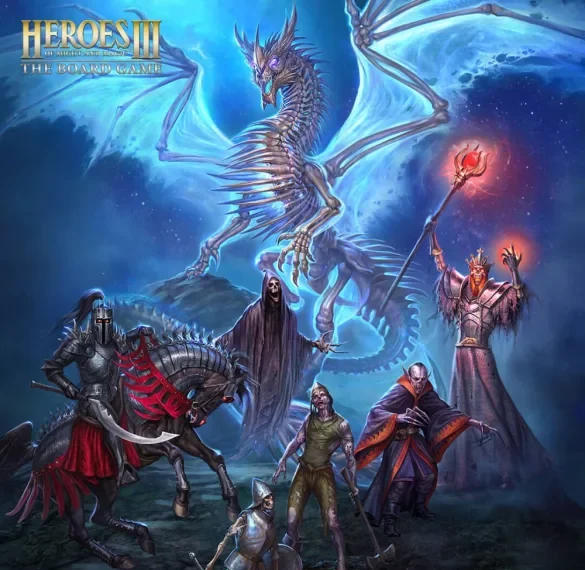
The Necropolis faction is pretty cool. They’re fun to play with necromancers, warlocks, and a whole lot of undead. The campaign story follows Sandro as he defeats rivals and makes his way to Deyja, where he hopes to top the hierarchy of power.
1. Target
Opening with a bang, the first mission requires defeating two enemy armies. It’s always a challenging task in Heroes of Might and Magic III to defeat more than one army at a time since there’s no good way to replenish troops quickly, so in this mission, I found it’s best to race to one army and defeat them quickly, then actually run away and power up to be ready for the second. One specific advantage the Necropolis faction has is that they can recruit and reinforce bronze units after combat (essentially raising the dead), and Sandro can power up packs of Skeletons and Zombies, adding just enough punch to defeat low-level armies.
Narratively, Sandro is an interesting character, personified alongside his minions in a fairly comical way. It’s a different way of portraying something like the undead, which should be cold and evil. It’s also true to the source narrative if I’m not mistaken. Sandro writes letters to his rivals before defeating them, and it’s an interesting enough string to follow. I wasn’t a fan of the writing style of this mission, though. It switches from third to second person, from an outside look at Sandro’s actions to becoming him ourselves as the scenario unfolds. I think picking one or the other is better.
2. Master
Necropolis’ second mission is almost the same as the first. It has a different map configuration and different enemy armies to fight, but the goal is the same: defeat both enemies. I actually found the scenario very easy because it showers you with starting resources. You can actually rush straight to gold units and overpower everything quickly.
During the story, a new character named Vidomina is introduced as a protégé to Sandro. Some type of affection between them is there, but it’s thin and coy at best. More comedy is introduced when undead minions chatter behind Sandro’s back, and he blasts them to pieces with lightning, but I found it a little trite.
3. Duke Alarice
Once again, defeat enemy armies, but this time, take the Dragon Utopia. I sense a lack of originality in the mechanics of this campaign… Nevertheless, I found it relatively easy again, just slightly better balanced because the enemy armies are coming at you fast, and the Dragon Utopia even has mummies helping guard it. Once again, you’re showered with resources, so rushing to gold units and ensuring you have a powerful deck is the best way to win.
There’s some more interaction between Sandro and Vidomina, some straightforward narrative defeating Duke Alarice, a rival lich, and an interesting section about allying with disgruntled dwarves. It’s straightforward and wraps up the campaign, essentially Sandro defeating everyone in his way while putting the squeeze on a beautiful young necromancer in training. Unfortunately, I wasn’t quite sure who the characters were, so the impact of defeating all these rivals was minimal. I was pretty unconvinced by any of the feelings the two main characters shared, and everything else was so straightforward that it felt like filler.
Tower
Tower focuses largely on magic, with both heroes of type Magic and units that help buff a magic-heavy deck. The story is written entirely in the second person, so I suppose it could refer to either available hero, though I assume it means Solmyr. All four missions are dragon hunts, and all four play very similar.
1. Crystal Dragons
First target, Crystal dragons. A little weaker than others, they’re fairly easy to take out, and the scenario provides plenty of time to run up to gold units. Assuming players acquire some decent spells along the way, it’s an easy fight.
Narratively, the story is a little comical again, and, with the exception of some nice descriptions of Crystal Dragons, entirely straightforward. Your hero is trying to impress your mother by training in dragon slaying, and that’s exactly what you do.
2. Rust Dragons
So, admittedly, I did not play this mission. It requires the Fortress expansion, which I have but wasn’t going to look at in this review. Assuming the eyes of a consumer that only has the core box and stretch goals, this is a disappointing entry in the campaign, as I think Archon could have swapped Rust dragons for… well, anything really.
I will say I looked at the mission, and it’s fairly straightforward. Your task is to capture mines, which finally ties into some narrative. Rust dragons eat sulphur and use acid to melt their enemies, so chasing them through several mines and then to a gem pond is a pretty cool story plot.
3. Faerie Dragons
This mission requires an expansion, Rampart. As such, it’s another one I did not play, which is unfortunate because it has probably the best story in all the campaigns! You follow the trail of a mischievous leprechaun who turns out to be faerie dragons in disguise. It’s a lengthy, creative narrative, and I like it a lot compared to the lackluster adjacent ones.
4. Azure Dragons
The final mission is pretty good from a balance and combat perspective, but there’s basically no narrative. Kill the dragons…
The dragon army at Utopia is quite strong, with multiple dragons and the AI deck to boost them. I found the mission a little difficult, and winning would largely come down to optimization and luck. At this point in the campaign, I didn’t feel like repeating the mission, so while I lost in the end, it was fun.
Emerging Narrative
Finally, that brings me to the emerging narrative.I found the flavor text on the item and Astrologer cards very well written. Each item has a little story about how you came across it, ranging from deadly encounters to hilarious accidents. It’s an unexpected but very welcome addition when it comes to immersion.
Besides the item cards, I wouldn’t say the rest of what emerges is very strong, leaving the game’s theme to do the heavy lifting. You certainly could imagine a lot as you roam the land, capturing locations, defeating creatures and looting all manner of the strange curios, I just think the focus always turns back to the mechanics.
You Might Like This Game If…
Certainly anyone who fondly remembers the video game or is heavily nostalgic may want to look into this game. Those who enjoy the art and components as much as the gameplay will find a whole lot to like here. I also wouldn’t call it a bad purchase to only want to paint and casually play with the miniatures. It’s pretty darn cool to throw dragons at each other.
While the game is a slimmed-down version of the deeper and often lengthier experience on PC, that could be a good thing for some. Maybe the bite-sized physical version that can be played from start to finish in an evening is even preferable.
While tempting, I would not really put this game up against others like Mage Knight or even Euthia. Heroes of Might and Magic III stands on its own, and that means having the game in your collection adds something fresh. If a few rough edges don’t bother you and what you’ve seen in this review excites you, it’s worth considering.
Or not…
On the flip side, the rulebook is a struggle, and those looking for tight, tactical gameplay probably won’t find it here. While some tactics and choices around heroes, factions, and armies are present, they’re light. Several of the aforementioned balance issues drag the game down, and randomness throws a huge wrench in planning. Players need to enjoy the journey as much as the outcome to love this game.
The bottom line
I’ve only reviewed the core box and stretch goals, but I think that’s already plenty to get your fill of Erathia. It is a little pricey to grab all the game has to offer at once anyway, so I’d recommend those to start. From there it’s plug and play for any faction you’d like to enjoy.
Score


While the Heroes of Might and Magic III board game successfully captures the spirit of the video game, I would have liked it to be a deeper, meatier experience. It needs tightening up in certain areas, like balance, swing, and variety. The campaigns are serviceable, but the game needs additional scenarios of all types.
Nevertheless, it looks incredible, there isn’t a lot of other games like it, and it’s fun. It’s certainly something I’ll come back to from time to time, is great to show off and enjoy with friends and family, and has a huge amount of support from the developers Archon as well as the community.
Heroes of Might and Magic III gets a 3/5 with a golden quill.
About the score
Review scores are out of five.
The Golden Quill award is for those games I keep in my collection, though it’s entirely possible for me to rate a game highly but not keep it or vice versa.
1/5: Would not recommend, would not play again
2/5: Some redeeming qualities, might recommend for the right person
3/5: Good game, would recommend
4/5: Great game, recommended that everyone give it a try
5/5: Perfectly achieves what it sets out to do, not to be missed